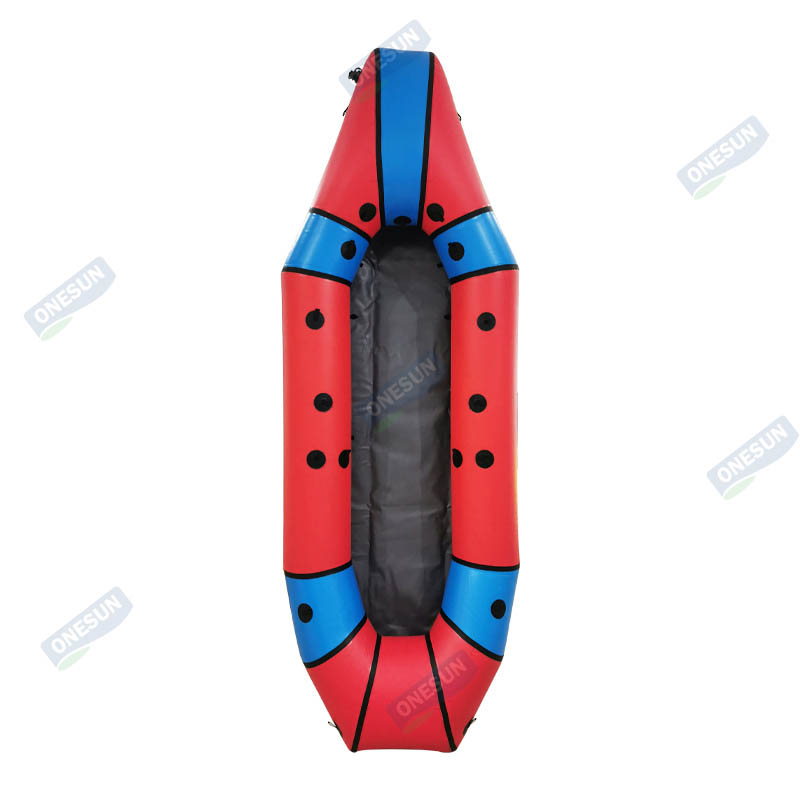
You must choose between extreme portability and water performance: an Inflatable Packraft maximizes low weight and packability for hike-in access, whereas inflatable kayaks offer superior tracking, speed, and safety chambers for paddle-focused trips. You can roll a lightweight packraft into your backpack for remote mountain lakes. You clear long overland portages without straining your back. In contrast, an outdoor inflatable kayak demands more carrying effort on trails. You gain faster hull speeds and straight tracking on open water in return. You must evaluate your route terrain carefully before picking your craft. Your choice dictates your daily comfort on trail and river.
Key Takeaways
- Packrafts weigh very little and fit easily inside your backpack for long hiking trips.
- Inflatable kayaks move faster and track straighter across open water than packrafts.
- TPU fabric packrafts stretch over sharp rocks to prevent tears on shallow rivers.
- Multiple air chambers make inflatable kayaks safer if a sharp rock punctures your boat.
Weight and Portage Capabilities
You need to balance total weight and packability when planning backcountry water adventures. Carrying heavy gear limits your travel distance on steep wilderness trails. Choosing the right watercraft changes your daily pack weight significantly.
Inflatable Packraft Advantages
An Inflatable Packraft relies on ultra-light thermoplastic polyurethane (TPU) materials. Ultra-light TPU materials allow packrafts to roll down small enough for long backpacking routes. You can fit your folded watercraft directly into your main backpack compartment along with your sleeping bag and trail food. The thin yet strong TPU fabric wraps tightly around your gear without wasting space.
Look at these specific TPU packraft measurements for popular ultralight models:
| Model |
Material |
Weight |
Packed size |
Backpacking note |
| Ghost |
TPU |
2.25 lb |
11 x 5 in |
Lightest Alpacka model |
| Scout |
TPU |
3.8 lb |
12 x 6.25 in |
General ultralight packraft |
| Hornet Lite |
Sidewall 70d TPU + nylon; floor 210d TPU + nylon |
4 lb 13 oz |
12 x 7 in |
Compact trail option |
| Rogue Lite |
Sidewall 210d TPU + nylon; floor 210d TPU + Kevlar/nylon |
5 lb 8 oz |
12 x 8 in |
Rugged ultralight design |
| Refuge |
TPU |
5 lb 8 oz |
15 x 7 in |
Explicitly suited to multiday/multiweek trips |
You preserve your physical energy during grueling mountain ascents because an ultralight packraft weighs so little. You can easily tackle multi-day wilderness treks across high mountain passes. The small footprint inside your pack leaves plenty of space for essential safety items.
Inflatable Kayak Transport Limits
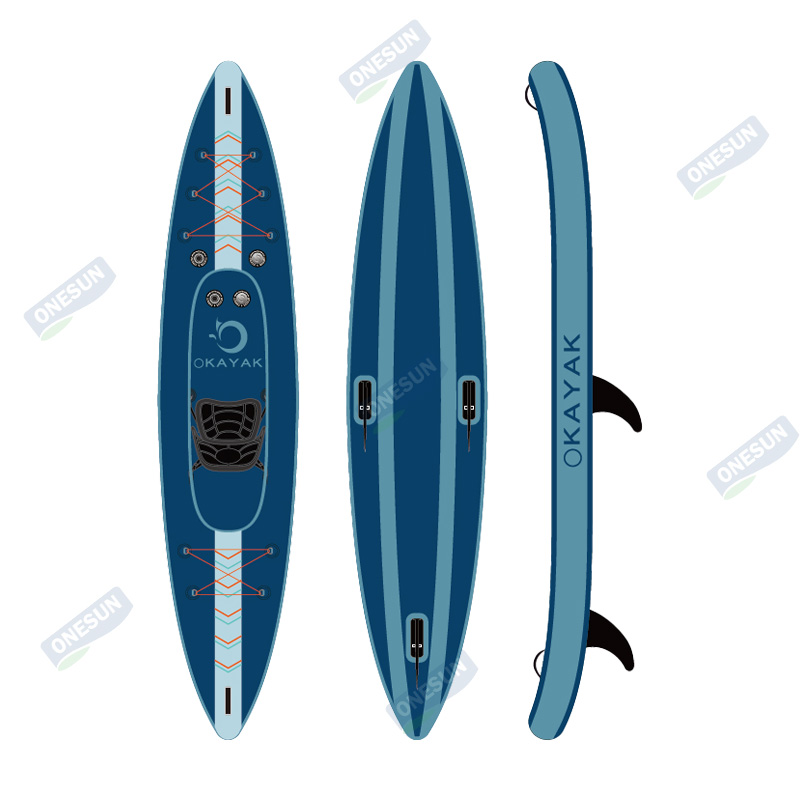
Inflatable kayaks demand much more effort during long overland portages. Heavy polyvinyl chloride (PVC) construction increases total boat mass rapidly. Heavy PVC packrafts lose their portability advantage over long distances. These heavy boats behave more like traditional rigid kayaks on the trail. You must carry them using dedicated shoulder straps, which causes faster physical fatigue. Brands like onesunsports produce durable models, but heavy materials hamper foot travel.
Look at how passenger and cargo kayaks compare to single-person packrafts in weight:
| Category |
Weight range (lb) |
Relevance to query |
| Ultralight packraft |
6–10 |
Baseline single-person packraft |
| Alpacka Caribou |
6.0–7.8 |
Lightest single-person packraft benchmark |
| Kokopelli Twain |
13.6 |
Lightest tandem-capable kayak/packraft; can carry passenger or gear |
| Typical inflatable kayak with passenger/cargo capability |
15–25 |
Representative 2-person inflatable kayak |
| Lightest tandem vs lightest packraft |
~5.8–7.6 heavier |
Specific model comparison supporting the range |
| Estimated difference |
~5–19 heavier |
Typical 2-person IK vs ultralight packraft |
A heavy outdoor inflatable kayak adds considerable bulk to your gear list. Your shoulders absorb extra stress during continuous trail miles. You will struggle to haul a 25 lb boat alongside full camping gear on multi-week backcountry routes. Thick PVC walls do not roll into tight cylinders. These larger folded bundles take up most of your internal backpack volume. You must strap the bulky package to the outside of your pack frame instead. Tree branches can easily snag your external gear on narrow forest paths. A whitewater packraft bridges some performance gaps, but heavy kayaks remain firmly tied to shorter portages. You should reserve heavy kayaks for drive-to river access or simple road-adjacent launches.
On-Water Performance and Speed
Your choice of watercraft directly shapes your daily paddling energy, speed, and efficiency. Hull design determines how fast you glide across open lakes and down twisting backcountry rivers.
Hull Tracking and Efficiency
An Inflatable Packraft features a short, wide, flat-bottomed hull with a low length-to-width ratio. This wide shape favors initial stability over speed. On calm flatwater, moderate cruising at approximately 45% effort yields about 2.5 mph in a packraft. Lazy paddling at 15% effort drops speed to 2 mph, while hard paddling at 75% effort reaches 3.3 mph. Shorter hulls rotate easily, but they require frequent paddle corrections.
| Hull shape (L:W ratio) |
Tracking performance |
Paddling efficiency |
| Long, slim kayak hull (higher L:W) |
Goes straight with little correction |
Faster and more efficient on flatwater |
| Short, wide packraft hull (lower L:W) |
Poorer tracking; frequent course correction |
Slower and less efficient on large lakes |
An Outdoor Inflatable Kayak from brands like onesunsports tracks straighter on flatwater. Long, narrow hulls displace more water and create higher rotational inertia. The extended stern limits yawing in the same way a skeg does, which improves trim and directional stability. You position yourself centrally in a kayak-like paddling posture, saving energy during long lake crossings.
Maneuverability and Self-Rescue
Shorter hull lengths give an Ultralight Packraft incredible maneuverability. You can spin your boat quickly around river obstacles because wide hulls face lower resistance during turns. A specialized Whitewater Packraft excels in tight canyon bends where immediate turning keeps you clear of dangerous hazards.
Self-rescue remains remarkably simple when you capsize in deep wilderness waters. Packrafts feature low side walls and wide, inherently stable craft geometry. You can grab the thick side tubes and pull your torso across the raft deck without tipping the craft over. Low sides reduce the physical effort needed to climb back aboard quickly during an unexpected swim.
Material Durability and Construction
TPU Lightweight Fabrics
You need strong materials that resist sharp rocks on shallow rivers. Modern boat builders use thermoplastic polyurethane to build compact, tough watercraft. TPU-coated tubes rely on 70D double-coated nylon, while a typical hull uses 210D fabric.
| Component / Material |
Fabric Spec |
Tensile & Elasticity Performance |
| TPU Tubes |
70D nylon TPU (double-coated) |
Breaking tensile 3,000–6,000 psi |
| TPU Hull |
210D nylon TPU |
Elongation up to 500% |
This high elasticity helps an Inflatable Packraft stretch over sharp river rocks without tearing. The material absorbs hard hits against shallow obstacles. You get high cut, puncture, tear, and wear resistance from light fabric layers. An Ultralight Packraft or Whitewater Packraft delivers this extreme resilience while staying easy to pack into your backpack.
Heavy-Duty PVC Resilience
Heavy-duty polyvinyl chloride provides massive structural rigidity for larger boats. Manufacturers like onesunsports build solid craft using heavy fabric layers for hard river use. An Outdoor Inflatable Kayak uses strong polyester scrim with thick outer coatings.
| PVC Specification Grade |
Fabric / Coating Thickness |
Strength Measurement |
| Scrim & Outer Layer |
840D–1100D scrim; 0.3–0.5 mm outer per side |
Baseline reinforcement |
| Base Fabric (0.9 mm) |
0.9 mm minimum thickness |
Tensile 420 N/5 cm warp |
| Four-Ply (1.2 mm) |
1.2 mm four-ply grade |
Tensile 750 N/5 cm; Tear strength 1,000 N+ |
Heavy PVC resists scraping along concrete boat ramps and gravel shorelines. However, PVC materials show lower strength and tear resistance under high mechanical loads. Extreme weather conditions can cause thick PVC layers to crack over time.
Quality inflatable kayaks generally last 5-10 years with proper care. Frequent use in rough water and rocky rivers lowers service life down near 6 years. Premium kayaks with welded seams and UV coatings can exceed 15+ years of continuous service.
Backcountry Safety and Air Chambers
You must prioritize craft safety features when paddling remote wilderness waters. Gear failure far from civilization can create immediate survival hazards. Air chamber design directly influences how your boat handles unexpected punctures.
Single vs Multiple Air Chambers
A standard Ultralight Packraft often relies on a single main air chamber for flotation. A sudden puncture in your primary tube might sound dangerous, but small field issues remain manageable. During actual testing with a slow leak, a paddler covered half a mile back to shore within 10–15 minutes without sinking. You can easily top off the air valve or head straight to land. Furthermore, packing internal drybags inside your main hull creates effective extra air chambers. In field tests, an Inflatable Packraft with deflated main tubes stayed afloat because sealed internal drybags provided reserve buoyancy.
An Outdoor Inflatable Kayak uses multiple independent air chambers for superior structural redundancy. Brands like onesunsports build kayaks with separate side tubes and floor bladders. Each chamber inflates through its own dedicated valve system. If a sharp rock punctures one side wall, only that specific compartment loses pressure. The remaining inflated chambers keep the kayak buoyant on the water. You retain enough stability to paddle your damaged boat safely to the nearest riverbank.
Gear Capacity and Load Balance
Proper weight distribution keeps your watercraft stable in swift currents. A specialized Whitewater Packraft allows you to store heavy gear inside the main air tubes using internal zipper systems. Stowing equipment low inside the hull lowers your overall center of gravity. This clever arrangement prevents the raft from tipping over in violent waves. You can also strap lighter drybags across the bow for quick trail access.
An inflatable kayak offers expansive open deck space for large cargo loads. Long hull frames accommodate heavy duffel bags, coolers, and multi-day camping packs easily. You can balance your gear along the floor center line without crowding your paddling stance. Secure tie-down points keep your cargo motionless during long lake crossings.
Choosing Craft for Your Adventure
Selecting your boat depends entirely on how you access the water. You must evaluate your trail distance, total gear weight, and paddle goals before buying your equipment.
Hike-In Wilderness Routes
Remote wilderness trips demand minimal weight and compact gear. An Inflatable Packraft shines when your journey involves long stretches of foot travel across rugged trails. You can pack a complete floating setup—including raft, paddle, PFD, and repair kit—at about 10 lb. Minimally reported non-inflatable PFDs with 16 lbf flotation weigh just 500 g. You can roll your raft, paddles, skirt, and inflation bag inside the PFD and carry everything with a 30 L daypack.
Consider the physical demands of high-altitude mountain trails. On a 20.3-mile, three-day loop from Fernandez Trailhead through the High Sierra, hikers carried five-pound boats inside backpacks over steep off-trail terrain. On another expedition from Rush Creek Trailhead to Thousand Island Lake, hikers tackled an 8.4-mile approach hike carrying about 35 lb per person, while one hiker hauled 45 lb to transport two boats. Using a specialized boat like the Alpacka Refuge saved about 1.5 lb compared to classic models. Storing gear inside air tubes lowered carried pack weight and made the 8.4-mile hike feasible. On long routes like the 87-mile Oregon Desert Trail section along the West Little Owyhee, long approach hikes make light packing vital.
Field-testing the Alpacka Refuge on this loop showed it weighed about 1.5 lb less than classic packraft models and worked well as a backpacking boat. Storing gear inside the boat tubes reduced the load carried on the approach, which helped make the 8.4-mile hike to the lake feasible.
Drive-To River Access
When your trip starts directly at a vehicle launch, weight matters far less than water performance. An Outdoor Inflatable Kayak from brands like onesunsports offers superior speed, higher capacity, and exceptional comfort for multi-day river trips. You do not need to squeeze your gear into a small backpack when portaging is not required.
Professional backcountry guides use specific criteria to match craft type with route conditions:
| Criterion |
Packraft |
Inflatable kayak |
Mixed hiking/paddling takeaway |
| Purpose |
Built for expeditions that combine hiking and floating |
Better for multi-day trips and easy cruises |
Choose packraft when the route alternates hiking and paddling |
| Weight |
About 6-19 lb, depending on material |
Example IK weighs ~33 lb |
Packraft reduces the weight carried on hiking sections |
| Packed size |
Packs down small (e.g., 24 x 10 in) |
Packs down larger (e.g., 24 x 20 in) |
Packraft is easier to stow in a backpack |
| Speed |
Generally slower |
Faster due to longer waterline |
IK if covering distance quickly is important |
| Whitewater readiness |
No self-bailing packraft currently offered |
IKs are self-bailing and recommended for whitewater |
IK if the paddle route includes significant whitewater |
| Cost |
PVC packrafts are often cheaper; TPU can reach about $1,500 |
Most IKs cost more, with some entry options around $539 |
Budget determines the trade-off; PVC packraft can be economical |
Kayaks weighing ~33 lb pack down to 24 x 20 in, while light rafts collapse to 24 x 10 in. Long waterlines increase speed on open water, while self-bailing designs handle rough rapids. You can buy entry kayaks around $539 or spend up to $1,500 for TPU rafts.
You balance crucial trade-offs between carrying weight, hull speed, safety features, and portage distance. Compact models weigh under six pounds, so you easily hike across rugged trails. Larger boats reach 33 lb, but they give you faster cruising on open water.
Choose an Inflatable Packraft for multi-day hike-in trips over remote mountain passes. Choose an inflatable kayak for open-water efficiency and direct river access.
You should match your craft selection directly to your route terrain. Evaluate your total trail distance before buying gear. Pick the light raft when long portages dominate your itinerary. Select the kayak when your launch point sits right by the road.
FAQ
Can you use an Inflatable Packraft for whitewater rapids?
You can tackle tight river bends in a specialized Whitewater Packraft. Shorter hulls give you incredible maneuverability around sharp obstacles. However, standard packrafts lack self-bailing decks. If your route features significant rapids, an Outdoor Inflatable Kayak handles continuous heavy waves much better.
How much weight does an Ultralight Packraft save on the trail?
An Ultralight Packraft baseline model weighs 6 to 10 pounds, while ultralight designs drop to 2.25 pounds. An Outdoor Inflatable Kayak from brands like onesunsports can weigh around 33 pounds. Choosing a packraft saves you roughly 5 to 19 pounds during long backpacking portages.
Which craft tracks better across open flatwater lakes?
An Outdoor Inflatable Kayak tracks much straighter across calm lakes. Its longer, streamlined hull creates higher directional stability and reduces yawing. In contrast, the shorter, wider hull of an Inflatable Packraft rotates easily, so you will make frequent paddle corrections on big open water.
Are TPU packrafts durable enough for shallow, rocky rivers?
Yes, high-grade TPU fabrics absorb hard scrapes easily. Builders use 70D double-coated nylon for tubes and 210D fabric for floors. This elastic material stretches over sharp river rocks without tearing, giving your boat extreme puncture resistance while maintaining an ultralight footprint inside your pack.



 IPv6 network supported