The inflatable SUP market offers countless options, and it’s easy to feel overwhelmed by the sheer variety. Most bad first experiences on the water come down to one simple mistake: choosing the wrong board size. So, how do you find the perfect fit for your body and paddling style? The answer lies in three key numbers—length, width, and thickness—which together determine stability, speed, and maneuverability. By understanding these dimensions, you can confidently select a board that feels stable and performs well, without needing any technical jargon. Just practical guidance. Learning how to choose right inflatable SUP board size becomes straightforward with this simple framework.
Brands like ONESUN, a leading inflatable SUP board manufacturer, offer a wide range of sizes to suit different paddlers. Their all-around inflatable SUP and touring inflatable SUP options make the decision easier once you know the basics. If you have specific needs, you can even explore a custom inflatable SUP board for a truly personalized experience. This guide helps you choose the right paddle board with confidence—so your perfect paddleboard is closer than you think.
Key Takeaways
-
Match your board size to your weight and skill level.
-
Use the three key dimensions: length, width, and thickness.
-
Choose a board based on your main activity.
-
Avoid boards that are too big or too small.
-
Respect the board's weight limit for safety.
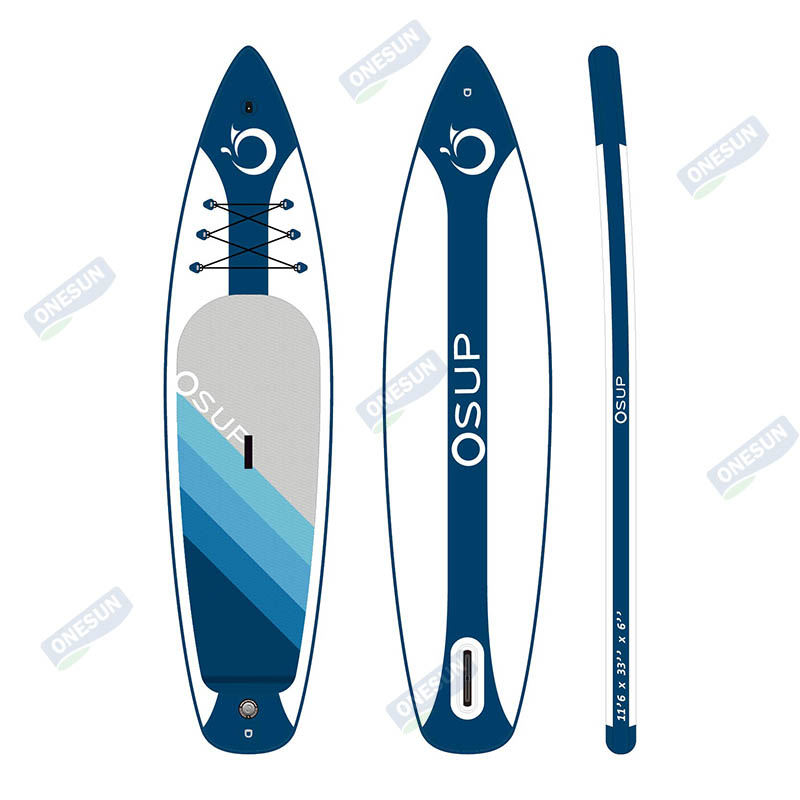
Quick Size Chart for Inflatable SUPs
Before you dive into the details of board dimensions, start with a simple reference. The table below gives you a baseline recommendation based on your weight. Think of it as your starting point, not a rigid rule. Your skill level and intended activity will fine-tune these numbers.
|
Paddler Weight
|
Recommended Length
|
Recommended Width
|
Recommended Thickness
|
|
Under 150 lbs
|
9'–10'6"
|
31–32 inches
|
5–6 inches
|
|
150–200 lbs
|
11'
|
32–33 inches
|
5 inches
|
|
200–225 lbs
|
10'–11'
|
32–34 inches
|
5 inches
|
|
225 lbs and up
|
11'–13'
|
33–36 inches
|
6 inches
|
Weight-Based Board Recommendations
Your paddler weight drives the most critical sizing decisions. Lighter paddlers under 150 pounds benefit from shorter boards in the 9' to 10'6" range. These boards reduce volume, making them easier to handle and transport. A narrower width of 31–32 inches keeps the board responsive without sacrificing too much stability.
For paddlers between 150 and 200 pounds, an 11-foot board with a 32–33 inch width hits the sweet spot. This combination provides enough surface area to support your weight while maintaining a balanced feel on the water. The standard 5-inch thickness works well here, offering adequate rigidity without adding unnecessary bulk.
Heavier paddlers over 225 pounds need more volume to stay afloat comfortably. A longer board between 11 and 13 feet gives you the extra displacement you need. Width becomes critical too—33 to 36 inches provides the stability required to feel secure. Most importantly, choose a 6-inch thickness. A 5-inch inflatable SUP works for most paddlers, but heavier riders benefit from the extra volume a 6-inch board provides, even though it feels bulkier to carry.
First-time buyers of any weight should look at boards between 10 and 11 feet long with widths from 31 to 35 inches. This range offers a forgiving platform that helps you build confidence quickly. ONESUN SPORTS designs their all-around inflatable SUP boards within these guidelines, making it easy to find a model that matches your weight class.
Activity-Based Size Adjustments
Your intended activity changes the equation. Yoga demands maximum stability, so look for a board at least 32 inches wide and 5 inches thick, ideally 10 to 12 feet long. The extra width gives you a solid base for balancing through poses. A touring inflatable SUP, by contrast, prioritizes speed and glide. These boards run longer—12 feet or more—with narrower widths that cut through water efficiently.
Surfing requires a completely different approach. A shorter board around 8'10" long and 29 inches wide gives you the maneuverability to catch and ride waves. The thinner profile, around 4 inches, reduces drag and makes the board easier to pivot. This size performs best on smaller rolling waves where quick turns matter more than raw speed.
Fishing adds another layer of consideration. You need room for gear, so a wider and longer board—11 feet or more—provides the stability and deck space you need. The extra width keeps the board steady when you cast or reel in a catch.
These paddleboard size charts give you a solid framework, but remember they are just a starting point. Your personal comfort and skill level should always guide your final decision. An intermediate paddler might prefer a slightly narrower board for better performance, while a beginner should err on the side of wider and more stable. ONESUN SPORTS, as a leading inflatable SUP board manufacturer, offers options across these ranges, and you can even explore a custom inflatable SUP board if you have specific needs. The right choice balances your weight, your activity, and your confidence on the water.
Key Dimensions for Inflatable SUPs
Understanding the three core dimensions—length, width, and thickness—transforms how you evaluate any paddleboard. Each measurement directly influences how the board feels beneath your feet, how efficiently it moves through water, and how well it supports your body weight. Once you grasp these fundamentals, you can confidently choose right inflatable sup board size for your specific needs.
Length: Speed and Tracking
Length determines how your board interacts with the water's surface. Longer boards in the 12–14 foot range achieve higher top-end speed because the extended waterline allows more efficient power transfer into forward motion. This same length naturally holds a straight course, meaning less energy is wasted on side-to-side corrections. In contrast, shorter boards require frequent alternating paddle strokes to stay on track, demonstrating that increased length is the key factor in both speed and tracking efficiency.
The length categories break down simply. Boards under 10 feet work best for surfing, kids, and lighter riders who prioritize maneuverability over distance. The 10–12 foot range suits all-around use, yoga, and fishing, offering a balanced compromise between speed and control. Boards over 12 feet excel at speed, gliding, and long-distance paddling, making them the preferred choice for touring enthusiasts.
|
Paddling Style
|
Length Range
|
Width Range
|
Thickness (Inflatable)
|
|
Surf
|
8'–9'6" (244–290 cm)
|
30" (76 cm)
|
6 inches (15 cm) typical
|
|
All-around
|
10'–10'6" (305–320 cm)
|
32" (81 cm)
|
6 inches (15 cm) typical
|
|
Touring
|
11'6"–14' (350–427 cm)
|
30" (76 cm)
|
6 inches (15 cm) typical
|
|
Racing
|
12'6"–14' (381–427 cm)
|
28" (71 cm)
|
6 inches (15 cm) typical
|
|
Yoga/Fishing
|
Not specified separately
|
34–35" (86–89 cm)
|
6 inches (15 cm) typical
|
Width and Thickness: Stability and Buoyancy
Width controls your lateral stability, which directly affects your confidence on the water. Wider boards increase the moment arm between you and the waterline, making small weight shifts less likely to cause tipping. For beginners, a practical width band is roughly 30–34 inches; narrower boards require more active balance, while boards wider than 34–36 inches can hinder turning in tight channels. Heavier paddlers or those carrying gear should opt for the upper end of the width range to maintain flotation and balance. Beyond a certain width, a board becomes harder to pivot and less responsive, which can impede learning efficient stroke mechanics.
Thickness determines the board's volume and weight capacity. Inflatable paddle boards are typically 6 inches thick, uniform across the entire length, compared to 4–5 inches for hard boards that taper at nose and tail. This uniform thickness gives inflatables more volume than hard boards of the same length. The standard for premium boards is 6 inches; anything less usually results in lower weight limits and more flex, reducing rigidity.
Thickness is crucial. The standard for premium boards is 6 inches; anything less usually results in lower weight limits and more flex (reduced rigidity).
For riders weighing over 225 lb, the extra volume may be helpful for keeping comfortably afloat, so a 6-inch thick board is generally called for. ONESUN uses premium materials to ensure rigidity at these thicknesses, so you get a stable platform without excessive flex. When you evaluate paddleboard size charts, remember that finding the right board dimensions involves balancing all three measurements against your weight and skill level. A touring inflatable SUP from a reputable inflatable SUP board manufacturer will prioritize length for speed, while an all around inflatable SUP balances width and thickness for versatility. If you need something specific, you can even request a custom inflatable SUP board tailored to your exact preferences. Every inflatable SUP board and inflatable paddle board on the market follows these same principles, so understanding the dimensions gives you the tools to make an informed choice.
How to Choose an SUP for Your Body Type
Your body composition plays a direct role in how a board performs beneath you. While height influences paddle length more than board dimensions, your weight determines the volume and width you need. A simple test for paddle length: stand the paddle vertically with the handle on the ground. The top blade should align with your wrist or just below it. This ensures efficient strokes regardless of your height.
Sizing for Lightweight and Heavyweight Paddlers
Lightweight paddlers under 150 pounds benefit from shorter, narrower boards. A 10-foot board with a 30-inch width offers easier handling and quicker response to paddle strokes. The reduced surface area creates less drag, allowing you to glide efficiently without fighting excess volume. You also find these boards easier to carry from your vehicle to the shoreline.
Heavyweight paddlers over 225 pounds need a completely different approach. You require longer, wider, and thicker boards to maintain adequate buoyancy. An 11-foot board with a 34-inch width and 6-inch thickness provides the volume necessary to keep you comfortably afloat. The extra width delivers the stability you need to feel secure, while the increased thickness prevents excessive flex that would compromise performance.
Your paddler weight also affects how the board sits in the water. A properly sized board keeps the deck slightly above the surface, allowing water to shed easily. If you notice the board riding low or feeling sluggish, you likely need more volume. Conversely, if the board feels tippy despite your best efforts, consider a wider model.
Beginner-Friendly Board Sizes
For beginners, the sweet spot falls between 10'6" and 11'6" in length, with a width of 32 to 34 inches. The 32-inch width serves as the minimum for adult beginners; anything narrower requires active balance that new paddlers haven't developed yet. Boards in this range offer predictable tracking without sacrificing maneuverability, making them ideal for calm water learning.
Thickness matters equally for newcomers. A 6-inch board provides the rigidity you need for confident standing, while thinner 4-inch boards flex noticeably underfoot. You should also verify that the board's weight capacity exceeds your body weight by at least 50 pounds. This margin accounts for gear, cooler, or a small dog joining your adventure.
ONESUN's all-around inflatable SUP boards align perfectly with these beginner specifications. Their 11-foot models feature 32-inch widths and 6-inch thickness, creating a forgiving platform that builds confidence quickly. As an inflatable SUP board manufacturer, ONESUN designs these boards to support new paddlers through their first season. Once you master the basics, you can transition to a touring inflatable SUP for longer distances or explore a custom inflatable SUP board tailored to your evolving style. Remember that paddleboard size charts provide guidance, but your comfort on the water remains the ultimate judge.
How to Choose an SUP for Your Activity
Your intended activity shapes the board you need more than any other factor. A board that excels at yoga will feel sluggish on a long-distance paddle. A touring board will feel unwieldy when you try to catch waves. Matching the board to your primary use ensures you get the performance you expect.
All-Around vs. Touring vs. Yoga Boards
All-around boards serve as the jack-of-all-trades option. These boards typically measure 10'6" in length with a 34-inch width. This combination balances speed and stability, making it ideal for beginners and general recreation. The moderate volume supports casual paddling, light fitness sessions, and family outings. If you plan to do a little bit of everything, an all around inflatable SUP fits the bill.
Yoga boards prioritize a wide, flat platform. Most yoga-specific models fall between 33 and 36 inches wide, with 10'6" being a common length. The extra width gives you a solid base for balancing through poses and transitioning between movements. High volume supports dynamic weight shifts without the board tipping. For yoga, stability trumps speed every time.
Touring boards take the opposite approach. These boards run 12'6" or longer with a narrower width around 30 inches. The longer hull cuts through water efficiently, providing better glide and tracking over distance. Higher volume accommodates gear storage for multi-day trips. A touring inflatable SUP sacrifices maneuverability for straight-line speed and efficiency.
|
Activity
|
Recommended Length
|
Recommended Width
|
Key Characteristic
|
|
Yoga
|
10'6"
|
33"–36"
|
Maximum stability for poses
|
|
All-around
|
10'6"
|
34"
|
Balanced speed and stability
|
|
Touring
|
12'6"+
|
~30"
|
Efficient glide and tracking
|
Special Considerations for Surfing and Fishing
Surfing demands a completely different board shape. You need a shorter board between 9 and 10 feet for maneuverability. The planing hull with a rounded nose allows you to ride over waves rather than cut through them. More rocker, or curvature, helps you pivot quickly when catching a wave. This hull type and activity combination prioritizes agility over speed.
Fishing requires the opposite approach. You need a board that stays stable under heavy loads. Look for a board 34 inches or wider—this width is non-negotiable for gear-heavy trips. Even 33 inches becomes unstable when you add tackle boxes and a cooler. For calm lakes, a standard 10'6" to 11-foot length works well, but width matters more than length for fishing stability. Aim for a weight capacity that keeps you 10–15 percent below the stated maximum for comfortable paddling. Fishing SUPs typically support 400–500+ pounds, giving you room for your catch and equipment.
ONESUN offers specialized boards that enhance these activities. Their all-around models work well for yoga and casual paddling. For touring enthusiasts, their longer boards provide the glide you need for distance. As an inflatable SUP board manufacturer, ONESUN designs each model with specific activities in mind. You can even request a custom inflatable SUP board if you have unique requirements. Every inflatable paddle board follows these same principles, so understanding your primary activity guides you toward the right choice.
Common Sizing Mistakes to Avoid
Even after reviewing the charts, paddlers make predictable errors. Two mistakes cause most frustration: assuming a larger board is always better and ignoring the weight limit. Avoiding these traps saves you money and keeps you safe on the water.
The "Bigger is Better" Fallacy
New paddlers often reach for the largest model, thinking more surface area equals more stability. This logic backfires for several reasons. A model too large becomes difficult to maneuver and awkward to transport. You fight the extra volume instead of enjoying the glide. The right size balances your weight, your skill level, and your intended activity. A touring inflatable SUP designed for speed feels cumbersome on short paddles. A wider model meant for fishing handles poorly on flat water. Matching the board to your use case matters more than maximizing size.
The biggest mistake: treating size as the whole answer. Choosing the right SUP also depends on shape, thickness, construction quality, and fin setup. Two boards with the same dimensions can feel completely different. Size charts help find a reasonable range, but they do not explain why similar models handle differently.
A beginner gains confidence from a stable platform, not from extra length. An intermediate paddler may prefer a narrower hull for better performance. Your hull shape matters as much as the raw numbers. ONESUN designs their all around inflatable SUP models with a balanced platform that suits multiple skill levels.
Ignoring the Board's Weight Limit
Every inflatable SUP has a maximum weight capacity printed on the box or product page. Many paddlers treat this number as a suggestion rather than a hard limit. When you exceed that capacity, the consequences follow a predictable pattern.
|
Consequence Category
|
Specific Outcome
|
|
Safety Risks
|
Sits lower, increasing drag and making return to shore difficult
|
|
Stability Issues
|
Becomes unstable and tips easily in choppy conditions
|
|
Performance & Durability
|
Poor tracking, requires more energy; stresses seams, shortening lifespan
|
The problems compound quickly:
-
Riding Low: The vessel gets pushed down, making it unstable.
-
Capsizing: Reduced buoyancy increases tipping risk.
-
Increased Drag: The craft drags instead of gliding.
-
The Taco Effect: The middle dips while nose and tail lift, creating an unstable shape.
These four outcomes create a dangerous cycle. The more you struggle, the harder you paddle, and the worse the situation becomes. You must factor in your body weight plus every piece of gear. A cooler, fishing rod, and dog add pounds quickly. The volume and weight capacity must cover the total load. When you evaluate any inflatable paddle board, subtract your full load from the stated limit. Keep a 10–15 percent buffer for comfort. Ignoring portability leads to a model that is exhausting to paddle.
Finding the right size means balancing your weight, skill level, and intended activity. A board too small feels tippy and unsafe. A board too large becomes cumbersome and hard to maneuver. Use the charts and guidelines above to narrow your options. Consider how your hull shape, thickness, and portability affect your experience on the water.
Don't hesitate to ask for advice from a local shop or the manufacturer. Brands like ONESUN provide detailed specifications and customer support to help you choose the right paddle board. Trust your instincts. The best board makes you feel safe and excited to get on the water.
The right inflatable SUP board size transforms your leisure time into pure enjoyment.
FAQ
What happens if I exceed my board's weight limit?
Your board sits lower in the water, creating more drag. Stability drops quickly, and you risk capsizing in choppy conditions. The middle may dip while nose and tail lift, forming an unstable shape. Always keep a 10–15 percent buffer between your total load and the stated maximum.
Can I use one board for multiple activities?
Yes, an all around inflatable SUP handles casual paddling, light yoga, and family outings well. However, dedicated activities perform better with specialized shapes. A touring inflatable SUP glides faster over distance, while a wider board supports yoga poses more effectively. Choose your primary activity first, then compromise on secondary uses.
How do I know if my board is too wide or too narrow?
If you struggle to turn or feel like you're fighting the board, it may be too wide. If you feel tippy and constantly adjust your balance, it's likely too narrow. Beginners should start with 32–34 inches of width. Your skill level determines how much width you actually need.
Does thickness really matter for inflatable boards?
Yes, thickness directly affects rigidity and weight capacity. A 6-inch board provides the stiffness you need for confident standing. Thinner 4-inch boards flex noticeably underfoot and support less weight. For paddlers over 225 pounds, 6 inches is essential. ONESUN, as an inflatable SUP board manufacturer, uses premium materials to maintain rigidity at this thickness.
Should I consider a custom inflatable SUP board?
A custom inflatable SUP board makes sense when standard sizes don't fit your needs. If you have unique weight distribution, specific activity requirements, or unusual storage constraints, customization helps. Most paddlers find a suitable match among standard options. Start with the size charts, then explore custom options only if something feels off.



 IPv6 network supported