Picture yourself a mile from shore when your paddleboard suddenly hisses and sinks. That fear drives every smart buying decision. You must check three factors before you buy: dual-chamber redundancy for flotation safety, volume-to-weight matching for stability, and material and valve quality for long-term reliability. A true double chamber inflatable SUP board delivers redundancy and removes the soft feel common in single-chamber boards. Heavier riders and choppy water demand this stiffness. At ONESUN, we design and test every board around these three factors. By the end of this guide, you'll know exactly what to look for to choose a double chamber inflatable SUP board that keeps you safe on every adventure.
Key Takeaways
-
Choose a double chamber board for safety: if one chamber fails, the other keeps you afloat.
-
Match board volume to your weight and skill level for stability and confidence on the water.
-
Check materials: high drop-stitch density and thick PVC make the board rigid and durable.
-
Test the board before buying: inflate both chambers, deflate one, and see if it holds shape.
-
Store your board out of direct sun and rinse with fresh water to extend its life.
Double Chamber Inflatable SUP Board Safety Benefits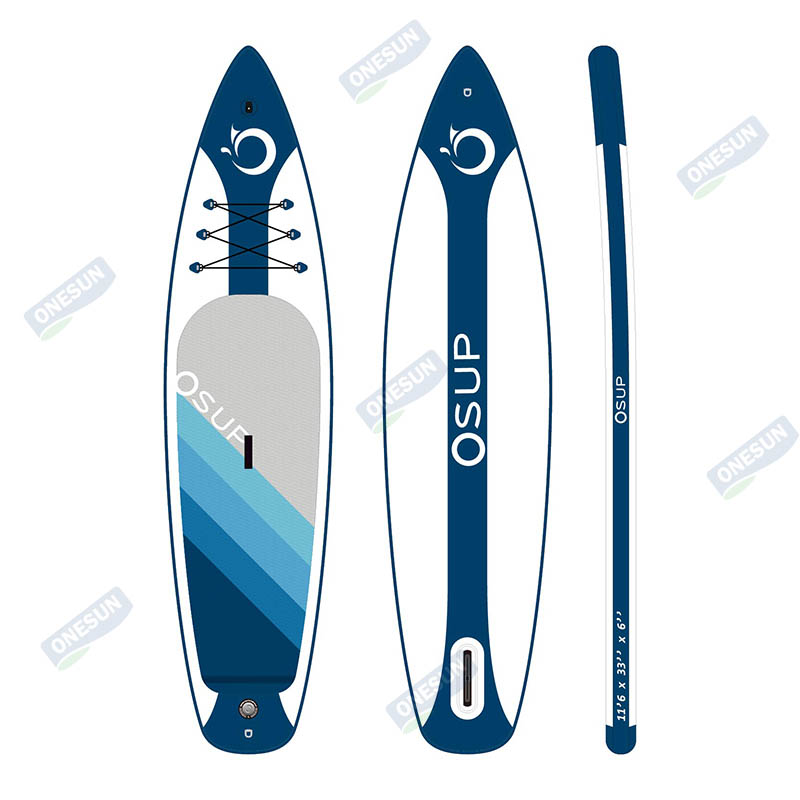
Flotation Redundancy and the PSI Sweet Spot
A single puncture should never end your day on the water. A double chamber inflatable SUP board solves this problem through independent air chambers. Each chamber holds its own air supply. If one chamber fails, the second chamber keeps you afloat. You can paddle back to shore safely instead of swimming.
You must inflate both chambers to the correct pressure range. This delivers maximum rigidity without overstressing the seams. Underinflation creates a floppy board. Overinflation risks a blowout. Check your pressure gauge before every launch.
The redundancy system works best when you maintain both chambers equally. Unequal pressure forces one chamber to carry more load. This imbalance reduces the safety margin. A quality pump with a built-in gauge makes this task simple.
Eliminating the Soft Feel for Stable Performance
Single-chamber boards flex under your weight. This flex creates a soft, mushy feeling underfoot. You lose confidence with every stroke. Double chamber construction eliminates this problem through increased rigidity.
The stiffness gains are measurable. Double chamber construction increases board stiffness by 15-20% compared to single chamber boards. Some manufacturers report a 30% increase in stiffness. Starboard claims their double-chamber system improves overall stiffness by 20-40% through double I-beam stringers placed in critical board areas. Under a 195 lbs paddler, a 2017 single-chamber Deluxe board sagged 49 mm. The 2018 double-chamber Deluxe board sagged only 25 mm. That represents a 50% reduction in sag under load.
The double air chamber functions like a surrounded double-wall structure, significantly increasing board stiffness. The second chamber covers nearly half of the board and is positioned in the standing area, which solves the "soft" and "unstable" problems of an ordinary paddle board and provides a more balanced ride in choppy water or stronger wind.
The secondary chamber acts like a central support beam. It limits flex in the standing zone. You feel a stiffer, more stable ride. The board performs more efficiently. The ride sensation comes closer to a hard board. Heavier riders notice this difference immediately. Choppy conditions test every board. A wide double chamber inflatable SUP board gives beginners a stable platform to build skills. Experienced paddlers choose double chamber boards for this exact reason. The stiffness transforms how the board handles wind and waves.
A drop stitch PVC inflatable SUP board with dual chambers delivers the rigidity you need. The internal drop stitch core connects the top and bottom layers. This connection prevents the board from ballooning. The second chamber reinforces this structure further. You get predictable performance in every condition.
Matching Board Volume to Your Weight and Skill
Calculating Target Volume for Optimal Float
Volume determines whether your board floats you or fights you. The relationship is simple physics. One liter of board volume displaces one liter of water and provides about one kilogram of lift. Your body weight in kilograms tells you the minimum volume you need.
Start with a basic formula. Multiply your body weight in kilograms by 2.2 to 2.5. The result gives you a target volume in liters. A 70 kg paddler should aim for roughly 175 liters. This ensures the board has sufficient buoyancy to support you comfortably.
Convert your weight first if you use pounds. Divide your pounds by 2.2 to get kilograms. A 180 lb paddler weighs about 81 kg. Multiply 81 by 2 to estimate the minimum beginner volume. That gives 162 liters. For beginners, choose at least this volume, and preferably 20 to 40 liters more for extra stability.
Your skill level changes the multiplier. A beginner needs more volume for confidence. An intermediate paddler needs less. An advanced paddler needs the least. The table below shows the multipliers.
|
Skill Level
|
Multiplier (kg → liters)
|
Multiplier (lb → liters)
|
|
Beginner
|
× 2.0
|
× 0.91
|
|
Intermediate
|
× 1.4
|
× 0.64
|
|
Advanced
|
× 1.0
|
× 0.45
|
A 75 kg paddler needs at least 150 liters at beginner level, 105 liters at intermediate, and 75 liters at advanced. Carry extra gear? Add 20 to 30 liters. A dog or cooler pushes you toward the top of the range. Heavy riders exceeding 200 lbs should aim for at least 250 to 320 liters.
The metric system is very useful for volume calculation as 1L of volume floats 1kg of weight by definition.
This matters for secondary stability. Extra volume keeps the rails higher in the water. The board resists tipping when you shift your weight. A stable inflatable SUP board for beginners depends on this margin.
Length, Width, and Intended Use for Stability
Length and width shape how the board performs. Touring boards prioritize speed and tracking. All-around boards prioritize maneuverability and versatility.
|
Board Category
|
Recommended Length
|
Recommended Width
|
|
Touring
|
Over 12' (e.g., 12'6")
|
Narrow (e.g., 28")
|
|
All-Around
|
10' to 12' (e.g., 11'6")
|
30" to 33" (e.g., 32")
|
A touring board over 12 feet long tracks straight and covers distance efficiently. A narrow width reduces drag. That speed costs you stability. An all-around board between 10 and 12 feet long turns easily. A width of 30 to 33 inches gives you a stable platform. This range suits most recreational paddlers and delivers a stable inflatable SUP board for beginners who are still building balance and confidence.
A wide double chamber inflatable SUP board adds rigidity to either category. The second chamber reinforces the standing zone. You get predictable handling in chop. Match your intended use to these dimensions. Then confirm your volume target. A double chamber inflatable SUP board that fits your weight and style keeps you safe and comfortable on every trip.
Materials and Valve Types for Durability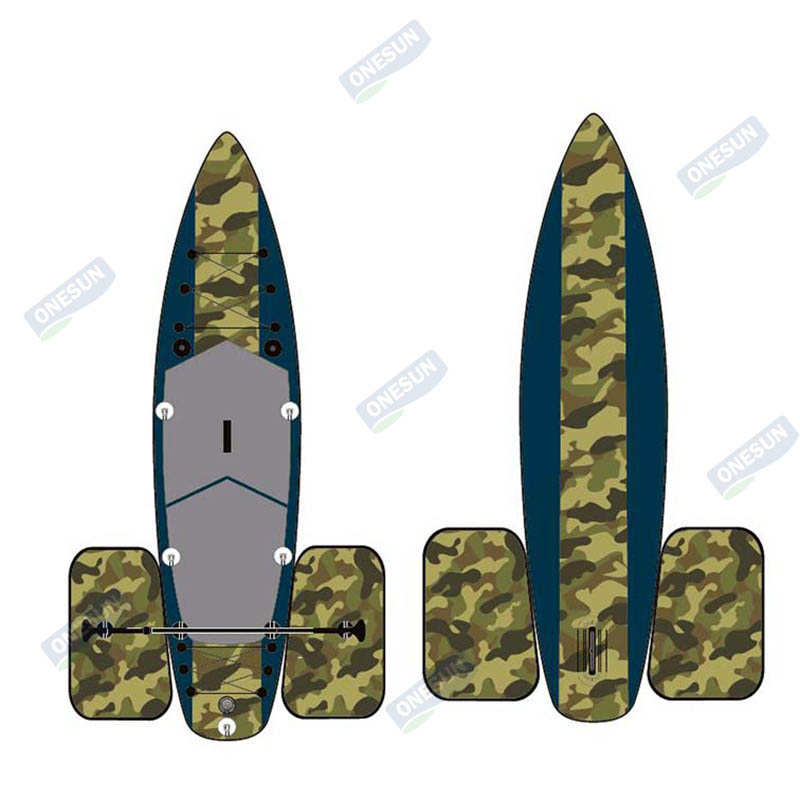
Drop-Stitch Density and PVC Gauge Explained
Drop-stitch density determines how rigid your board feels. Thread count per square inch directly affects stiffness. Higher thread density allows the board to withstand greater pressure, increasing rigidity.
Higher thread density (1–2 threads per square inch) allows the board to withstand greater pressure, directly increasing rigidity. More threads per square inch result in a stiffer board, though at a higher cost. Denser drop-stitch spacing helps the board maintain its shape under pressure, contributing to overall rigidity.
PVC thickness affects puncture resistance. Look for boards with at least 0.9mm PVC thickness. But do not trust the label "military-grade" alone. That term carries little real meaning because no official military specification exists for PVC fabric. What genuinely determines durability is the source of the drop-stitch fabric, the number and arrangement of layers, and the quality of the rail tape seal at the edges. When a product listing emphasizes "military-grade" while omitting these construction details, it often signals that important quality information is being concealed.
|
Material Grade
|
Thickness Range
|
Typical Application
|
|
Military-grade PVC
|
0.9 mm – 1.2 mm
|
Premium SUPs, commercial rental boards
|
|
Standard PVC
|
0.7 mm – 0.9 mm
|
Entry-level consumer boards
|
|
Hypalon CSM
|
0.9 mm – 1.5 mm
|
Military, rescue, commercial RIBs
|
A drop stitch PVC inflatable SUP board with quality materials and high thread density delivers better performance.
Boston Valve vs H3 Valve: Which is More Reliable?
Boston valves use a simple spring mechanism. You depress the pin to deflate the board. You unscrew the valve body for repair. This design works well in the field. You can replace a damaged seal without special tools. The trade-off involves slower inflation speed.
H3 valves accept higher air pressure. They speed up inflation because they accept standard pump heads. The downside involves repair difficulty. Replacing an H3 valve requires cutting the old valve out and gluing a new one in. This process needs strong adhesive and careful technique.
Choose based on your priorities. The Boston valve suits most paddlers because of its field-serviceability. The ability to repair a valve yourself outweighs the slight speed difference. A double chamber inflatable SUP board with Boston valves gives you peace of mind on the water.
Pre-Purchase Tests and Maintenance Tips
Visual and Air Leak Tests at Home
You should test any board before you commit to buying it. Inflate the board to its full recommended pressure. Let it sit for a period of time and watch the pressure gauge for any drop. A steady reading means the seams and valves hold air properly. A falling reading signals a leak you cannot see.
Inspect every valve seal with your fingers. Run your hand along the seams and rail tape. Look for bubbles, wrinkles, or loose adhesive. These small defects grow into big problems on the water.
Test the separation between chambers on a double chamber inflatable SUP board. Inflate both chambers fully. Deflate one chamber completely. The second chamber should hold the board's shape and keep you supported. This test confirms the redundancy system works as designed.
Storage Habits to Prevent Material Fatigue
Sunlight damages inflatable materials over time. UV exposure causes cumulative aging rather than immediate harm. Graphics fade, PVC dries out, adhesive seams weaken, and the material loses elasticity. Think of the difference between a car parked outside daily and one kept in a garage.
Sunlight can be an inflatable board's kryptonite, causing colors to fade and materials to degrade. Modern boards use UV protection as a shield, akin to sunscreen for the board, to maintain its appearance and performance.
Store your board out of direct sun whenever possible. A drop stitch PVC inflatable SUP board with UV-protective coatings resists this damage better. Boards without such coatings can weaken more quickly from direct sun exposure.
Avoid storing your board fully deflated. Rolled storage can create creases over time.
If you have an inflatable SUP, leaving your board partially inflated and storing it like you would a rigid board can help prevent it from developing permanent creases and deformations.
Rinse your board with fresh water after every saltwater session. Salt crystals abrade the PVC surface and dry out the material. Dry the board completely before storage. These habits extend the lifespan of both chambers.
You now know the three factors that matter most: chamber redundancy, volume matching, and material quality. A double chamber inflatable SUP board delivers all three. Redundancy keeps you afloat after a puncture. Proper volume matching keeps you stable. Quality materials and valves keep you safe for many years. This purchase is not just gear. It is safety, stability, and peace of mind. With a double chamber board, you're not just choosing a board; you're choosing safety, stability, and performance. Use this guide to evaluate your options, test the board before you buy, and get out on the water with confidence.
FAQ
How do I know if a board truly has two separate chambers?
Inflate both chambers fully, then deflate one completely. The other chamber must hold the board's shape and keep you supported. This test confirms real redundancy. A board with a decorative second chamber will collapse during this check.
What PSI should I use in each chamber?
Inflate both chambers to the same pressure, as recommended by the manufacturer. Equal pressure keeps the load balanced across the structure. Unequal pressure forces one chamber to carry more weight and reduces your safety margin. Always check your gauge before launching.
Can a beginner handle a double chamber board?
Yes. The added rigidity creates a more predictable platform, which suits new paddlers well. A stable inflatable SUP board for beginners removes the flex that causes wobble. Choose a wide double chamber inflatable SUP board in the 10' to 12' range, then match the volume to your body weight.
How long will the board last?
Lifespan depends on your habits, not a fixed number. Store the board out of direct sun, keep it partially inflated, and rinse it with fresh water after saltwater use. These steps slow material fatigue in both chambers.
Is a drop stitch PVC inflatable SUP board worth the higher price?
Quality construction justifies the cost. Denser drop-stitch threading and thicker PVC resist punctures and hold rigidity under load. A drop stitch PVC inflatable SUP board with a field-serviceable Boston valve also lets you handle repairs yourself instead of replacing the board.




 IPv6 network supported