
The right Inflatable Water Games for your operation depend on three factors: your site and audience, the equipment's specifications and safety, and your business and cost model. Weigh water depth, space, guest profile, capacity, materials, certifications, customization, and total cost together. A single low price rarely survives contact with real guests. Resorts prioritize guest experience and brand fit. Water parks focus on throughput and seamless integration with existing attractions. Rental businesses live on durability, transport weight, setup speed, and repeat bookings. Your business type sets the priorities. Start there, and every later decision becomes simpler.
Key Takeaways
-
Match games to your site: check water depth and space first.
-
Know your guests: pick themes and capacity for their ages and needs.
-
Choose durable materials and verify safety certifications like ASTM F2374.
-
Customize themes and branding to make your attraction stand out.
-
Calculate total costs and pick equipment that rents often for good ROI.
Match Inflatable Water Games to Your Site
Check Water Depth and Space
Water depth decides which games you can safely offer. Measure at the season's lowest expected water level, because reservoirs and irrigation lakes can drop a metre or more by late summer. Use these minimums as your filter:
|
Zone |
Minimum water depth |
Reason |
|---|---|---|
|
Slides, jump towers, launch features |
3 m (10 ft) |
Entry velocity from height |
|
Climbing, balance, traverse modules |
2 m (6.5 ft) |
Falls from standing height |
|
Entry platform / exit lane |
1.5 m (5 ft) |
Controlled water entry only |
Available space then sets your scale. A small resort or campground fits 300–500 m² and handles roughly 20–30 guests per session. A day-visitor beach operation needs 800–1,200 m² for about 50–80 guests. A destination park runs 2,000 m² and above, with full staffing and its own ticketing. Single modular games let you start small and connect units later to expand an existing park. A PVC Inflatable Seesaw Boat or an Inflatable Banana Boat works well as a first module, and both link into a larger layout as demand grows.
Plan Land-Based and Utility Needs
Clear the ground of stones, sticks, and hidden hazards, including underground services and irrigation lines, before you stake anything. Mark the inflatable footprint plus clearances for the blower, anchors, hose, and adult access. Grade the ground so water drains properly, and plan runoff away from electrical equipment and walkways. Confirm anchoring and power arrangements before anyone enters, and follow the blower manual and local electrical rules for outdoor power, using GFCI protection.
Accessibility and parking shape site choice for rental and resort operators. High-traffic locations with road access, public transport, and visibility from major roads give temporary or seasonal operations a real advantage. Check that guests can park and reach the entry point easily before you commit to a location for your inflatable Water Games.
Define Your Audience and Capacity
Identify Target Guests
Your guest profile decides which inflatable Water Games you stock and how you theme them. Families with toddlers need gentle, enclosed features. Teens want height, speed, and a visible thrill. Event renters care about setup speed and a theme that fits many occasions.For venues targeting active children and teenagers, a portable inflatable climbing wall can add a more challenging activity to the attraction mix. Before selecting a model, consider the intended age group, available space, installation requirements, and manufacturer-specified safety guidelines.
|
Age Group / Audience |
Popular Themes |
Key Features |
|---|---|---|
|
Toddlers (Ages 2–5) |
Unicorns, dinosaurs |
Gentle slopes, shallow splash areas, enclosed climbing areas, no-jump zones, soft landings, bright colors |
|
Kids (Ages 6–12) |
Lava splash, galactic space, jungle vibes |
Mid-sized (13–16 ft), large splash pools, dual lanes for racing, combo units with bounce areas |
|
Teens / Tweens / Crowd Events |
High-energy themes |
16+ ft tall, dual lanes, steep drop angles, larger splash zones, suited for block parties, teen birthdays, youth groups |
Combo units serve mixed-age crowds well. A Passion Bounce and Water Slide pairs a large bouncing area with an attached water slide, a splash pool landing, and mesh netting for safety. The Pink Daydream Bounce and Slide adds a covered top for shade, which helps on long summer days. A PVC Inflatable Seesaw Boat suits calm, shallow zones and gives younger guests a gentle option.
Set User Capacity Limits
Capacity planning starts with throughput, not footprint. Compare hourly participant counts before you commit to a mix.
|
Inflatable Type |
Participants per Hour |
|---|---|
|
96-ft obstacle course |
120–180 |
|
Standard 15x15-ft bounce house |
75–90 |
|
Single-lane 35-ft water slide |
30–40 |
|
Dual-lane water slide |
60–80 |
Match the mix to the event. A school field day with 200–300 students needs 3–5 attractions, anchored by a 96-ft obstacle course as the primary throughput driver. Corporate picnics favor 115-ft or 160-ft flagship courses sized for relay heats and timed competitions. Community festivals run 6–8 attractions with zoned layouts, keeping toddler areas separate from competition obstacles. A full water park setup runs about 10 attractions across roughly 12,400 sq ft including circulation space. An Inflatable Banana Boat fits low-throughput, high-dwell zones where guests linger rather than queue.
Evaluate Inflatable Water Games Specifications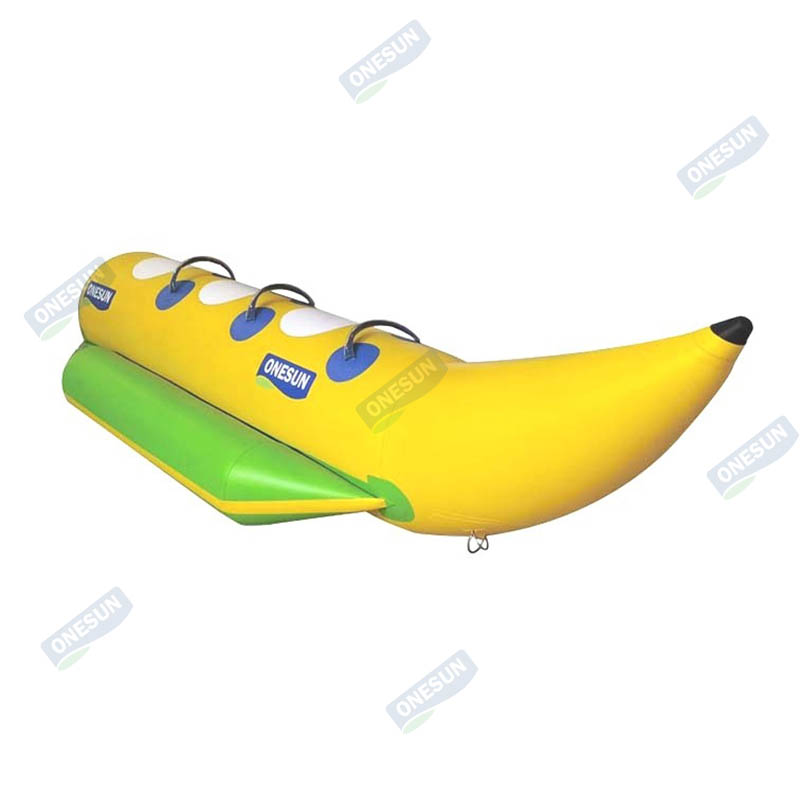
Assess Material Quality
Material quality determines how long your inflatable Water Games last and how safely they perform.For resorts and water parks looking to expand their attractions, a durable floating trampoline on water can provide an engaging activity for guests. When evaluating a floating trampoline, consider PVC material quality, reinforced seams, UV resistance, anchoring requirements, and ease of maintenance to support long-term commercial use. Commercial-grade PVC with high-density polyester mesh reinforcement distributes stress evenly and resists tear propagation. Low-quality PVC punctures easily and turns small damage into major tears. Compare the two grades before you commit:
|
Safety Factor |
Commercial-Grade PVC |
Low-Quality PVC |
|---|---|---|
|
Thickness |
0.9mm reinforced |
0.45–0.6mm |
|
Reinforcement |
High-density polyester mesh |
Low-density mesh or none |
|
Tear Resistance |
Excellent — stress distributed evenly |
Poor — punctures become major tears |
|
UV Resistance |
UV-coated, retains flexibility |
Fades, cracks, becomes brittle |
|
Expected Service Life |
5–8+ years with maintenance |
1–3 years |
|
Certification |
EN ISO 25649 |
Often uncertified |
PVC thickness sets the durability baseline. Commercial inflatables start at 0.55mm, and heavy-duty installations call for 0.7mm. Tensile strength for commercial-grade tarpaulin typically exceeds 2000N per 5cm strip. UV stabilizers preserve color and structural integrity for years, which matters for any outdoor installation. Cold crack resistance keeps material flexible down to -30°C for year-round use. Water and chlorine resistance protect slides and pool applications from chemical degradation. A PVC Inflatable Seesaw Boat built from this specification handles shallow-zone use season after season.
Confirm Safety Standards
Certifications separate tested equipment from untested equipment. Verify these standards before you purchase:
-
ASTM F2374-22 covers design, manufacture, installation, operation, maintenance, and modification of commercial inflatable amusement devices. It specifies strength, tear and tensile resistance, flame resistance per NFPA 701, and safe adhesives and coatings.
-
ISO 25649-1:2024 and EN ISO 25649-6:2026 govern inflatable water park devices (Class D), with heavy emphasis on entrapment and drowning prevention, including minimum water depth tied to slide height.
-
EN14960-2013 covers material properties, construction, and safety features for inflatable play equipment.
These standards target real failure points. EN14960 requires walls at least 1.8 m high on bounce houses and enclosed structures, caps entrance height at 630 mm, and mandates cushioned crash mats at exits. Sharp edges and protrusions are prohibited. Seams and joints must meet specific strength requirements. Blower compatibility requirements ensure consistent air pressure with safety mechanisms for power failures.
Operational protocols complement the paperwork. Anchoring failure ranks as the most serious failure mode, so evaluate soil conditions, use correct stakes or ballast, and verify every anchor point independently. On hard surfaces, commercial-grade 80 lb anchoring water bags meeting ASTM F2374 minimum holding force replace stakes. Monitor wind with a digital anemometer and stop operation at the 15 mph maximum safe wind speed. Enforce manufacturer-specified weight and occupant limits. Inspect equipment before each rental, test blowers and electrical systems, check anchor hardware, and schedule annual professional safety audits. An Inflatable Banana Boat in a low-throughput zone still needs the same anchor verification and pre-use inspection as a full slide complex.
Choose Customization and Themes
Select Themes and Branding
Themes turn a generic inflatable into a landmark guests remember. Pirate, unicorn, volcano, and ocean designs suit event rentals, hotels, water parks, and family entertainment centers. You can specify custom colors, print your logo directly onto the inflatable, and choose size variants that range from 1,000 sq m up to 100,000 sq m for mobile parks. Hotels often want branding that matches their pool deck. Water parks favor bold, high-visibility themes that read from a distance. Family entertainment centers benefit from themed obstacle courses that anchor a birthday package.
Design services expand your options further. OEM and ODM programs, 3D design customization, and tailored obstacle courses let you build a bespoke layout instead of picking from a catalog. An Inflatable Banana Boat, for example, can carry a resort's colors and logo while serving as a relaxed, low-throughput zone for guests who want to float rather than race.
Plan Installation and Maintenance
Installation and seasonal care protect your investment. Set up on clean, debris-free surfaces, avoid sharp objects, and place tarps under the base. Secure the unit with stakes or sandbags, and keep hoses connected without kinks. Anchoring choice depends on the bottom: screw anchors hold well in sand, while mud and rocky bottoms call for larger concrete blocks, longer lines, and abrasion sleeves.
Maintenance follows a fixed routine. Rinse with clean water after every use, apply a mild non-abrasive cleaner to seams and high-traffic areas, and remove debris before drying. Fully inflate the unit to air dry, towel-dry seams and hidden areas, and never store it damp, because mold can form within 24–48 hours. Inspect before and after each rental for tears, weak seams, loose anchors, blower damage, and water leaks. Schedule monthly or seasonal deep cleaning, apply vinyl protectant, and test blowers and electrical components. Store the unit folded in a cool, dry place, and train staff on setup, cleaning standards, and early damage detection. A PVC Inflatable Seesaw Boat kept to this routine will outlast one that sits wet in a trailer.
Choose the Right Manufacturer
Compare Support and Track Record
Compare manufacturers on three dimensions before you sign: support, references, and track record. Ask each supplier the same questions and score the answers side by side.
|
Comparison Dimension |
Criteria to Evaluate |
|---|---|
|
Support |
Responsive customer service; multi-year warranty on defects; clear setup and maintenance guides; fast reply to inquiries |
|
References |
Online reviews; industry awards; customer testimonials; feedback on durability and service; direct reference requests; safety-inspector rankings |
|
Track record |
Years in the industry; size of customer base; ASTM compliance; reputation with rental businesses; documented satisfied clients |
A manufacturer offering a three-year warranty and clear setup documentation demonstrates strong after-sales support. One ranked highly by safety inspectors and reviewed well by rental businesses shows third-party validation. A supplier serving over 8,000 customers with ASTM-compliant, commercial-grade products demonstrates a proven, scalable track record. ONESUN SPORTS is one manufacturer option worth evaluating against these criteria. Request two or three direct references from operators running similar sites, and call them.
Calculate Total Cost of Ownership
The purchase price is only the first line of your budget. Rental businesses carry permits, insurance, staffing, storage, and maintenance every year.
-
State permits run $200–$600 per jurisdiction; safety certification runs $800–$2,000 annually per location.
-
Commercial liability premiums run $2,400–$6,000 yearly, with workers' comp at $2,000–$4,000 and transport insurance at $1,500–$2,500.
-
Staff earn $15–$25 per hour, with at least one staff member per inflatable unit during events; training costs $200–$500 per employee.
-
Quarterly maintenance runs $500–$1,500 per unit.
Hidden annual costs overall reach $15,000–$25,000 beyond the equipment itself. Weigh that against revenue. Dedicated water slides command the highest daily rental rates, from $259 to $599, and wet/dry slide combos extend your season into cooler months. As one operator puts it, ROI isn't determined by how much an inflatable costs — it's determined by how often it gets rented. Choose inflatable Water Games that rent repeatedly, and the numbers work.
Your selection framework rests on four pillars: site and audience, equipment and safety, customization, and business and cost. Match every decision to your business type. A resort needs brand fit and guest experience. A water park needs throughput. A rental operator needs durability and fast setup. Do not chase the lowest price. Verify certifications such as ASTM F2374 and EN14960, request direct references from similar operators, and calculate total cost of ownership before you commit. Well-chosen inflatable Water Games can drive repeat visits and steady revenue across resorts, water parks, and rental operations for years.
FAQ
What water depth do I need for slides and climbing modules?
Plan for at least 3 m (10 ft) under slides, jump towers, and launch features. Climbing and balance modules need 2 m (6.5 ft). Keep entry and exit lanes at 1.5 m (5 ft). Measure at the season's lowest expected water level, not at spring fill.
Which certifications should I verify before buying?
Ask for ASTM F2374-22, EN14960-2013, and ISO 25649 documentation for Class D water devices. These standards cover strength, tear resistance, flame resistance, entrapment prevention, and wall heights. Untested equipment carries real liability risk. Request certificates in writing and confirm they match the model you order.
How many guests can my inflatable Water Games handle per hour?
Throughput depends on the unit. A dual-lane water slide serves 60–80 guests per hour, while a single-lane slide handles 30–40. A 96-ft obstacle course moves 120–180. Size your attraction mix to your expected crowd, not to your available footprint.
How long should commercial inflatables last?
Commercial-grade PVC with high-density polyester mesh reinforcement typically lasts 5–8+ years with proper maintenance. Thin, unreinforced material often fails within 1–3 years. Rinse after each use, dry fully before storage, and inspect seams and anchors regularly. A PVC Inflatable Seesaw Boat kept to this routine will outlast one stored wet.
Can I start small and expand later?
Yes. Single modular games connect into larger layouts as demand grows. Many operators begin with one or two units, such as an Inflatable Banana Boat for calm shallow zones, then add slides and obstacle courses. Plan your site layout and utility capacity for the eventual footprint before you buy the first module.


 IPv6 network supported