An inflatable SUP board should feel steady enough for you to stand, paddle, and change direction without constantly fighting to keep your balance. But what actually makes an inflatable paddle board stable on the water? The answer is not just its width or thickness. Board dimensions, hull shape, internal drop-stitch construction, inflation pressure, fin configuration, and weight distribution all work together to determine how stable a board feels.
For beginners, families, and recreational paddlers, these details can make a noticeable difference. At ONESUN, inflatable SUP boards are designed for different water activities, from all-around paddling to tandem adventures and water yoga. Understanding the features behind board stability also helps buyers select the right products for their customers.
What Does Stability Mean for an Inflatable SUP Board?
SUP board stability refers to how well a paddle board stays balanced when a person stands, moves, or paddles on it. A stable board resists excessive side-to-side movement and provides a predictable platform, especially when the rider shifts body weight or encounters small waves.
There are two important aspects of stability to understand:
- Primary stability: How steady the board feels when it is floating flat on relatively calm water. This is particularly important for beginners who are still learning to stand and find their balance.
- Secondary stability: How the board behaves when it tilts from side to side. A well-designed board should provide predictable support as the paddler shifts position.
A board that feels stable on a quiet lake may behave differently in windy conditions or moving water. Therefore, stability should be evaluated according to the intended activity, rider weight, and water environment rather than a single product specification.
Board Width Is One of the Biggest Factors Affecting Stability
Width directly influences how much room a paddler has to maintain balance. A wider inflatable SUP generally provides a larger standing platform and makes it easier for beginners to distribute their weight without immediately tipping to one side.
For many recreational adult paddlers, boards around 32 to 34 inches wide offer a practical balance between stability and maneuverability. Wider designs may be particularly useful for family activities, fishing, and water yoga, where users often need more room to move.
However, choosing the widest board available is not always the best solution. Excessive width can make paddling less efficient and turning more difficult. A narrower board may glide more efficiently, but it usually requires better balance and more experience.
ONESUN offers different designs for different paddling preferences. Its All Around SUP Paddle Board is a versatile option for recreational use, while specialized wider designs are more suitable for activities that require additional standing space.
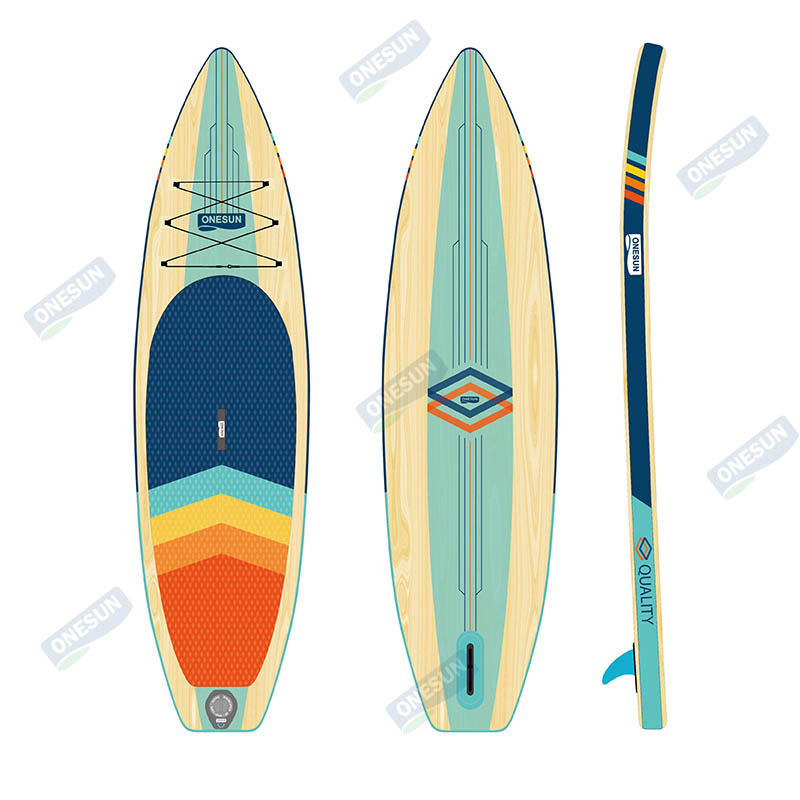
The right width ultimately depends on who will use the board. For manufacturers, distributors, and private-label brands, offering several width options can help serve beginners, experienced paddlers, and specialty water sports markets more effectively.
How Board Length and Thickness Influence Water Stability
Width is important, but length and thickness also affect how an inflatable SUP performs. These dimensions influence buoyancy, weight distribution, water contact, and the overall feel of the board.
Board length affects tracking and maneuverability. Longer boards generally maintain a straighter direction and can be more efficient for touring. Shorter boards are easier to turn and handle, although they may provide less overall volume.
Board thickness contributes to the board's internal volume and load capacity. Many recreational inflatable SUP boards use a thickness of around 6 inches. This provides sufficient volume for a broad range of users when combined with appropriate width, length, and construction.
However, a thicker board is not automatically more stable. If the board is too narrow for the rider or does not have sufficient rigidity, additional thickness alone will not solve the problem.
For example, a heavier paddler carrying camping equipment needs a board with sufficient volume and load capacity. If the combined weight exceeds the recommended capacity, the board may sit too low in the water, increasing drag and making balance more difficult.
When choosing an inflatable paddle board, consider all three dimensions together rather than comparing thickness or length in isolation.
Why Drop Stitch Construction Makes an Inflatable SUP More Rigid
One of the most important structural features of an inflatable SUP board is its drop-stitch core. Unlike a simple inflatable air mattress, a drop-stitch board contains thousands of connecting threads between its upper and lower fabric layers.
When the board is inflated, these internal threads help the two surfaces maintain a controlled distance from each other. This allows the board to form a relatively flat, rigid platform instead of expanding into a rounded shape.
Quality drop-stitch construction helps an inflatable SUP maintain its intended profile under the paddler's weight. It also reduces excessive bending and improves the board's responsiveness when the rider changes position or applies paddle force.
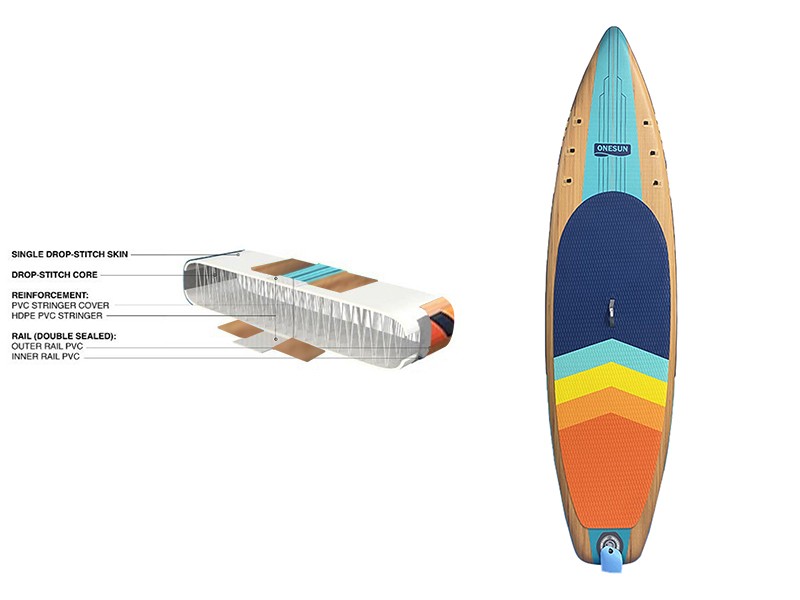
ONESUN uses Drop Stitch and PVC materials in its inflatable SUP products. Its inflatable SUP board collection covers different designs for recreational paddling and specialized applications.
For wholesale buyers, it is worth looking beyond the words "drop stitch" on a product specification sheet. Fabric quality, thread structure, PVC reinforcement, rail construction, bonding processes, and manufacturing consistency all influence the finished board's rigidity and durability.
Correct Inflation Pressure Helps Maintain Board Rigidity
An inflatable SUP needs to be inflated to the pressure specified by its manufacturer. If the pressure is too low, the board may feel soft and flex excessively under the paddler's weight. This can make standing and paddling less predictable.
When inflated correctly, the internal structure can better maintain the board's intended shape. This improves stiffness and helps the paddler feel more connected to the water.
It is important to understand that higher pressure does not always mean better performance. Every board has a recommended operating pressure and a maximum pressure limit. Exceeding those limits can place unnecessary stress on the seams, valves, and material layers.
Before heading onto the water, users should:
- Check the manufacturer's recommended PSI.
- Use a suitable pressure gauge when inflating the board.
- Inspect the valve and surrounding areas for air leakage.
- Check pressure again if the board has been exposed to significant temperature changes.
- Avoid exceeding the maximum pressure stated by the manufacturer.
For more detailed guidance, read our article about the ideal PSI for an inflatable SUP board.
Fin Configuration Improves Tracking and Directional Control
Fins are another important part of an inflatable paddle board's performance. They extend below the board and help resist unwanted sideways movement as the paddler moves forward.
Without an appropriate fin setup, a SUP may drift from side to side, requiring more frequent corrections with the paddle. This can make it feel less controlled, even when the board itself has a wide and stable platform.
Different fin configurations serve different purposes:
- Single center fin: Commonly used for recreational and touring boards. It helps the board track in a relatively straight line.
- Three-fin configuration: Can provide additional directional control and is often used for versatile paddling conditions.
- Specialized fin designs: Different sizes and shapes can be selected according to the intended water conditions and board performance requirements.
Fin size, placement, and shape should match the board's hull design. A larger fin does not necessarily make every SUP more stable, because it may also affect turning and maneuverability.
Weight Capacity and Weight Distribution Matter More Than Many Paddlers Expect
Even a well-constructed inflatable SUP can feel unstable when it carries more weight than it was designed to support. The rider's body weight, clothing, equipment, water bottles, and other accessories all contribute to the total load.
When too much weight is concentrated in one area, the board may sit unevenly in the water. This changes how the hull interacts with the water surface and can make balancing more difficult.
To improve stability, users should:
- Stay within the manufacturer's recommended weight capacity.
- Position heavier equipment near the center of the board.
- Distribute accessories evenly rather than concentrating everything at one end.
- Choose a board with sufficient volume for the combined rider and equipment weight.
- Consider a larger or wider model when paddling with another person or carrying substantial gear.
For family outings and shared recreational activities, a tandem design may be a more suitable option than asking two people to use a standard single-person board. ONESUN's Large Tandem SUP Paddle Board is designed specifically for two-person recreational use.
Why Hull Shape and Intended Activity Should Be Considered Together
The shape of an inflatable SUP determines how it sits and moves on the water. A wide, rounded all-around board generally provides a forgiving platform for casual paddling. A longer, narrower touring board is designed to move efficiently over longer distances.
Different activities also create different stability requirements:
- Recreational paddling: An all-around shape offers a practical combination of balance, maneuverability, and versatility.
- SUP yoga: A wider deck provides more room for standing, stretching, and changing positions.
- Touring: A longer hull supports efficient forward movement and better tracking over distance.
- Family activities: A larger board with suitable load capacity can provide more room for recreational use.

For paddlers who prioritize balance during water exercise, the ONESUN Yoga SUP Board is a specialized design worth considering. Its wider yoga-oriented platform is intended to provide more space for water-based exercise.
There is no single hull shape that performs best in every situation. The right choice depends on the balance between stability, speed, tracking, and maneuverability.
How Can You Choose a More Stable Inflatable SUP Board?
If you are buying an inflatable SUP for personal use or sourcing products for a retail business, the following checklist can help you compare different models more effectively.
| Feature |
What to Check |
Why It Matters |
| Width |
Suitable standing platform |
Supports side-to-side balance |
| Length |
Matches the intended activity |
Influences tracking and handling |
| Thickness |
Appropriate board volume |
Contributes to buoyancy and load capacity |
| Construction |
Drop-stitch core and PVC quality |
Helps maintain rigidity and shape |
| Inflation pressure |
Manufacturer's recommended PSI |
Reduces excessive board flex |
| Fin system |
Fin number, size, and placement |
Supports directional control |
| Weight capacity |
Total rider and equipment weight |
Helps maintain proper flotation |
For distributors and private-label buyers, it is also important to evaluate production consistency, material specifications, customization options, and quality inspection procedures. These details help ensure that the boards supplied to end customers meet the intended performance requirements.
Why Choose ONESUN for Inflatable SUP Boards?
Choosing a stable inflatable SUP is about more than selecting a board with attractive colors or a high weight capacity. The product needs to combine suitable dimensions, reliable materials, appropriate internal construction, and a design that matches its intended use.
Fujian ONESUN Sports Technology Co., Ltd. was founded in 2015 and specializes in inflatable paddle boards, kayaks, inflatable boats, and other outdoor recreational products. The company integrates product development, manufacturing, and export services to support different market requirements.
ONESUN offers multiple SUP designs, including all-around boards, yoga boards, tandem boards, and other specialized models. For buyers looking for wholesale supply or customized inflatable paddle boards, the company can discuss product configurations and customization requirements according to different market needs.
Whether you are developing a beginner-friendly paddle board range, expanding a water sports product catalog, or sourcing boards for a private-label brand, selecting the right construction and dimensions is an important starting point.
Explore the ONESUN SUP board range to compare available designs and find a suitable solution for your target market.
Frequently Asked Questions About Inflatable SUP Board Stability
What makes an inflatable SUP board stable on the water?
An inflatable SUP board's stability depends on its width, length, thickness, hull shape, drop-stitch construction, inflation pressure, fin configuration, and weight distribution. These factors work together to determine how well the board supports a paddler and resists unwanted movement.
Is a wider inflatable SUP board more stable?
Generally, yes. A wider board provides a larger standing platform and helps beginners maintain side-to-side balance. However, excessive width can make paddling and turning less efficient, so the ideal width depends on the user's weight, experience, and intended activity.
Does drop-stitch construction improve SUP stability?
Yes. Drop-stitch threads connect the upper and lower surfaces of an inflatable board, helping it maintain a flatter and more rigid shape when inflated. This reduces excessive flex and supports a more predictable paddling platform.
Does inflation pressure affect inflatable paddle board stability?
Yes. An underinflated board may flex excessively under the rider's weight and feel less responsive. Inflating the board to the manufacturer's recommended PSI helps maintain its intended shape and rigidity. Never exceed the specified pressure limit.
What size inflatable SUP is best for beginners?
Many adult beginners find all-around boards around 10'6" to 11'6" long and 32 to 34 inches wide comfortable to learn on. The final choice should also consider the paddler's weight, board volume, weight capacity, and water conditions.
Are inflatable SUP boards suitable for yoga?
Yes. Inflatable SUP boards designed for yoga usually feature a wider standing platform that provides more room for changing positions and maintaining balance. A dedicated yoga board is often more suitable than a narrow touring or racing model.
Can two people use one inflatable SUP board?
Some larger tandem SUP boards are designed for two-person recreational use. Buyers should check the manufacturer's specified load capacity, dimensions, and intended use before selecting a tandem model.
How can I make my inflatable SUP feel more stable?
Choose a board that matches your weight and experience, inflate it to the recommended pressure, distribute equipment evenly, check the fin installation, and practice in calm water. Beginners should start by kneeling before gradually moving into a standing position.




 IPv6 network supported