How long does an inflatable SUP board last? A quality inflatable stand up paddle board can often last around five to ten years with proper care, although its actual lifespan depends on material quality, construction, storage conditions, UV exposure, and frequency of use. Some boards may last longer, while poorly maintained boards can develop leaks, seam problems, or material deterioration much sooner.
For paddlers, understanding what affects durability can help prevent avoidable damage. For retailers, distributors, and outdoor brands, it is equally important to evaluate PVC quality, Drop Stitch construction, valve design, and manufacturing consistency when sourcing inflatable paddle boards. ONESUN offers inflatable SUP boards for different water sports activities and customer requirements.

An inflatable SUP board's construction and materials contribute to its long-term durability.
How Long Does an Inflatable SUP Board Typically Last?
As a general estimate, a well-made inflatable SUP board may last five to ten years under normal recreational use and with consistent maintenance. This is a general guideline rather than a guaranteed service life for every model. The manufacturer's warranty period should not be confused with the board's expected lifespan.
Several factors determine how long an inflatable paddle board remains usable:
- Material quality: PVC quality and resistance to abrasion, sunlight, and repeated flexing affect long-term durability.
- Drop Stitch construction: The internal thread structure helps the inflated board maintain its intended shape and rigidity.
- Seam and rail bonding: Poorly bonded seams or damaged rail edges can eventually lead to air leaks.
- Valve performance: A damaged valve or deteriorated seal may allow air to escape.
- Use and storage: Repeated exposure to intense sunlight, excessive heat, sharp objects, and improper storage can shorten the board's service life.
A board used occasionally on calm lakes and stored correctly may remain in good condition longer than one used frequently in harsh environments. Even a premium board requires regular inspection and proper care.
Buyers comparing different designs can explore the ONESUN inflatable SUP board collection to review available styles for recreational paddling, fitness, racing, and other water activities.
How Do PVC and Drop Stitch Construction Affect Durability?
Material selection and internal construction are two of the most important factors affecting the lifespan of an inflatable SUP board. Many inflatable paddle boards use PVC outer layers combined with a Drop Stitch core to balance portability, rigidity, and resistance to everyday wear.
Drop Stitch construction connects the upper and lower surfaces through numerous internal threads. When the board is inflated, these connections help maintain the intended thickness and shape instead of allowing the board to expand like a simple inflatable tube.
PVC forms the external surface and helps protect the board against water, abrasion, and ordinary handling. However, not all PVC materials or bonding processes offer the same performance. Material grade, layer construction, seam quality, and manufacturing consistency all influence durability.

Drop Stitch construction and reinforced PVC components work together to maintain board shape and rigidity.
When evaluating a board, consider the complete construction rather than relying on a single marketing term. A thicker-looking board or a higher advertised pressure rating does not automatically guarantee a longer service life.
For example, the ONESUN ORace inflatable SUP board uses Drop Stitch and PVC construction. Its product page lists a one-year warranty. These are useful product-specific details, but the warranty period alone does not determine how long the board will remain usable.
What Can Shorten the Lifespan of an Inflatable Paddle Board?
Most inflatable SUP boards do not fail simply because they have reached a certain age. Damage often develops gradually through environmental exposure, incorrect inflation, rough handling, or insufficient maintenance.
Prolonged UV exposure: Leaving a board in direct sunlight for extended periods can accelerate material aging. Heat also increases internal air pressure, potentially placing unnecessary stress on seams and other components.
Incorrect inflation pressure: Overinflation can strain the PVC layers, seams, and valve. Underinflation may cause excessive flexing and affect handling. Always follow the pressure range specified for the individual board.
Abrasion and punctures: Dragging a board over gravel, sharp rocks, shells, or rough concrete can damage the outer material. Carrying it to the water is generally preferable to dragging it across an abrasive surface.
Moisture during storage: Packing away a wet board can encourage mold, unpleasant odors, and deterioration of certain components. Rinsing and drying the board before storage helps prevent these problems.
Improper long-term storage: Leaving a board in a hot vehicle, storing it beside heat sources, or folding it tightly in the same places for extended periods can place unnecessary stress on its materials.
These risks apply to recreational and specialized boards alike. Owners should follow the manufacturer's instructions instead of assuming that every inflatable SUP can tolerate the same pressure, folding method, or storage conditions.
How Should You Maintain an Inflatable SUP Board?
Regular maintenance is one of the simplest ways to extend the usable life of an inflatable paddle board. A few minutes of care after each trip can help prevent avoidable damage and identify small problems before they become serious.
- Rinse after use: Use fresh water to remove salt, sand, mud, and other residues, especially after paddling in the sea.
- Dry before storage: Dry the deck, underside, seams, and valve area before packing the board away.
- Check the pressure: Inflate the board according to the manufacturer's instructions and never exceed its stated maximum pressure.
- Inspect the seams: Look for lifting edges, unusual bulges, visible damage, or signs of air leakage.
- Protect the valve: Keep sand and debris away from the valve and check that its cap and seal are in good condition.
- Store away from heat and sunlight: Choose a cool, dry, shaded place and avoid prolonged exposure to extreme temperatures.
- Avoid sharp objects: Use suitable carrying methods and keep the board away from rough surfaces whenever possible.
If the board will remain unused for an extended period, follow the manufacturer's guidance on whether to store it inflated or deflated and how loosely it should be folded. Different constructions may have different storage recommendations.
It is also useful to keep the original repair kit and product instructions. Small punctures or minor leaks may be repairable, but damage near a major seam, valve, or structural area may require professional assessment.
Can an Inflatable SUP Board Be Repaired Instead of Replaced?
Yes. Many inflatable SUP boards can be repaired if the damage is limited and the surrounding material remains in good condition. Whether repair is worthwhile depends on the location, size, and severity of the damage.
Small punctures: A compatible repair patch may restore the board when the puncture is minor and the repair is completed according to the manufacturer's instructions.
Valve leaks: Some valve problems can be resolved by cleaning, tightening, or replacing the relevant component. The correct procedure depends on the valve design.
Seam separation: Damage along a seam or rail can be more complicated because the affected area may be under significant pressure. Such repairs may require specialist materials and experienced technicians.
Before applying a patch, locate the source of the leak and confirm that the board is suitable for repair. Do not use an adhesive that is incompatible with the PVC or other materials in the board.
After a repair, follow the recommended curing time and perform an appropriate leak check before returning to the water. If the board has major structural damage or cannot maintain pressure reliably, replacing it may be the safer option.
How Does a Double Chamber Design Affect Board Safety?
Some inflatable SUP boards use a double chamber design to provide an additional air chamber. Depending on the construction, the second chamber can provide additional flotation if the primary chamber is compromised. It is a safety-related design feature, not a guarantee against damage or sinking.
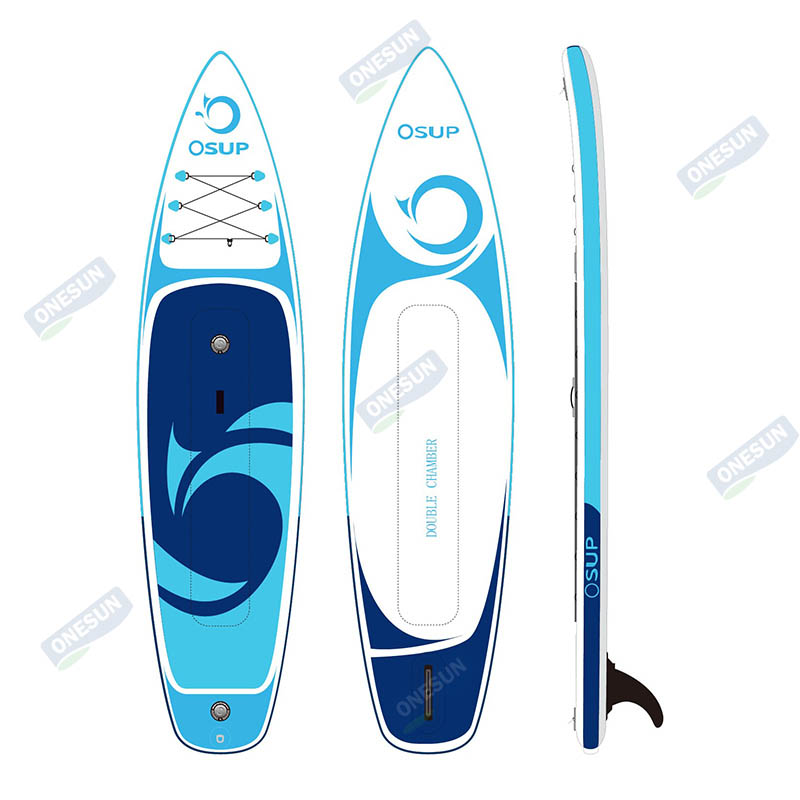
A double chamber design adds a separate air chamber to the board's construction.
ONESUN's double chamber inflatable SUP board uses Drop Stitch and PVC materials. The product is designed with two air chambers to provide additional flotation support in certain air-loss situations.
When comparing double chamber boards, buyers should still assess the quality of the materials, seams, valves, and manufacturing process. Each chamber must be inflated and maintained according to the manufacturer's instructions. Users should also follow local water safety rules and wear suitable personal flotation equipment when required.
What Should Buyers Look for in a Durable Inflatable SUP Board?
For individual paddlers, durability means getting reliable performance over many seasons. For retailers, importers, and private-label brands, it also means selecting products that can meet customer expectations and reduce avoidable warranty claims.
When comparing inflatable SUP board manufacturers, consider these practical points:
- Material specifications: Ask about PVC construction, Drop Stitch fabric, reinforcement, and intended operating conditions.
- Bonding quality: Understand how the manufacturer controls seam bonding, rail construction, and valve installation.
- Pressure specifications: Check the recommended operating pressure and maximum permitted pressure for each model.
- Quality control: Ask about air-leak inspections, production checks, and finished-product testing.
- Warranty and support: Confirm warranty coverage, exclusions, repair guidance, and the availability of replacement parts.
- Product suitability: Match the board's size, width, weight capacity, and design to its intended users and activities.
ONESUN supplies inflatable SUP boards in different designs for water sports and outdoor leisure. Its product range allows buyers to review different inflatable product categories and identify models suited to their target markets.
For wholesale orders or private-label projects, request current specifications, confirm customization options, and discuss quality-control requirements directly with the supplier. These steps provide a more reliable basis for evaluating long-term value than comparing purchase prices alone.
When Is It Time to Replace an Inflatable SUP Board?
Age alone is not a reliable reason to replace an inflatable SUP board. A board that has been carefully maintained may remain usable for years, while a newer board may need to be retired if its structure is seriously compromised.
Consider replacing the board or having it professionally assessed if you notice:
- Repeated air loss that cannot be reliably repaired.
- Extensive seam separation or major structural damage.
- Severe material deterioration, cracking, or persistent deformation.
- A damaged valve or connection that cannot maintain pressure.
- Unusual bulging or changes in shape that remain after correct inflation.
- Damage that makes the board unstable or unreliable on the water.
Do not use a board if you suspect a structural failure. A repair should restore reliable performance, not simply conceal visible damage. When in doubt, consult the manufacturer or a qualified repair professional before using it again.
Frequently Asked Questions About Inflatable SUP Board Lifespan
How many years does an inflatable SUP board last?
A quality inflatable SUP board may last around five to ten years with proper maintenance, although actual lifespan varies with construction quality, usage, storage, and environmental exposure. This is a general estimate rather than a guaranteed service life.
Can an inflatable paddle board last ten years?
Yes, some boards can remain usable for ten years or longer when made with durable materials and maintained correctly. Regular inspections, appropriate inflation pressure, and protection from prolonged sunlight and excessive heat can help extend service life.
Does leaving an inflatable SUP in the sun damage it?
Prolonged sunlight and high temperatures can accelerate material aging and increase internal pressure. Store the board in a shaded place and follow the manufacturer's guidance when leaving it inflated in warm conditions.
How often should I check an inflatable SUP board for leaks?
Inspect the board before each outing, paying attention to the seams, valve, and outer surface. If you notice unexplained pressure loss, investigate the cause before using the board.
Is a Drop Stitch inflatable SUP board more durable?
Drop Stitch construction helps an inflatable board maintain its shape and rigidity under pressure. Overall durability also depends on PVC quality, seam bonding, valve design, manufacturing consistency, and how the board is used and maintained.
Can a leaking inflatable SUP board be repaired?
Many small punctures and some valve leaks can be repaired using compatible materials and the correct procedure. Extensive seam separation or structural damage may require professional repair or replacement.
What is the best way to store an inflatable SUP board?
Rinse off salt and dirt, dry the board thoroughly, and store it in a cool, dry place away from direct sunlight and excessive heat. Follow the manufacturer's instructions for inflation level and folding or rolling.
How can wholesale buyers choose a durable inflatable SUP board?
Evaluate PVC and Drop Stitch specifications, seam and valve quality, pressure ratings, quality-control procedures, warranty terms, and replacement-part support. Request detailed product specifications and confirm the intended application before placing a bulk order.
In short, an inflatable SUP board can provide years of reliable use when its construction is appropriate for the intended activity and its owner follows consistent maintenance practices. For brands and distributors, choosing a capable manufacturer and checking product specifications before purchasing are equally important steps toward long-term customer satisfaction.
To explore available models or discuss wholesale and customization requirements, visit the ONESUN website and contact the team for current product specifications and purchasing support.




 IPv6 network supported