
You want to pick the best inflatable kayak for your next adventure, right? Start by thinking about what you want from a recreational kayak. Ask yourself how you plan to use it, where you’ll paddle, and how much you want to spend. Focus on comfort, safety, and features that matter to you. Trust your instincts and have fun with the process. You can make a smart choice and enjoy every moment on the water!
Key Takeaways
-
Identify your kayaking needs by considering solo or tandem options. Choose a kayak that fits your paddling style and adventure plans.
-
Match your kayak to the water conditions you’ll encounter. Select a model designed for calm lakes, slow rivers, or light coastal use.
-
Prioritize comfort and features in your kayak. Look for adjustable seats and footrests to enhance your paddling experience.
-
Invest in a durable kayak that suits your frequency of use. Higher-priced models often offer better materials and safety features.
-
Always bring essential safety gear on your trips. A Personal Flotation Device (PFD) and other accessories ensure a safe and enjoyable adventure.
Define Your Kayak Needs
Solo vs. Tandem Inflatable Kayak
Choosing between a solo or tandem inflatable kayak depends on how you want to paddle. If you love heading out alone, a solo kayak gives you freedom and easy handling. You can carry it by yourself, set it up quickly, and enjoy the water at your own pace. If you often paddle with friends or family, tandem kayaks let you share the adventure. You can adjust the seats for solo trips or bring a partner along.
Here’s a quick comparison to help you decide:
|
Factor |
Solo Kayak |
Tandem Kayak |
|---|---|---|
|
Transportability |
Easier to transport alone |
Requires more effort to transport |
|
Stability |
Stable for one paddler |
Stable for two, but longer |
|
Weight Capacity |
Lower weight limits |
Higher weight limits for two paddlers |
|
Versatility |
Limited to one paddler |
Can be paddled solo or with a partner |
|
Maneuverability |
Easier to maneuver |
Harder to maneuver due to length |
|
Solo Paddling Option |
Not applicable |
Can be paddled solo by adjusting seats |
-
If you plan to paddle solo but sometimes join a group, look for an inflatable kayak that’s easy to carry and set up alone.
-
Tandem kayaks can be adjusted for solo paddling by removing one seat and repositioning the other.
-
Solo kayaks are shorter and easier to turn, but less versatile than tandem models.
-
Solo kayaks are designed for one person, making them simple to paddle and steer.
-
Tandem kayaks fit two paddlers but can be used solo, offering flexibility.
-
Tandem kayaks are longer, so you might need more space to store and transport them.
Tip: Tandem kayaks offer flexibility. You can paddle solo by adjusting the seating arrangement, so you don’t have to miss out on solo adventures.
Water Conditions and Frequency
Think about where and how often you’ll use your inflatable kayak. Calm lakes are perfect for beginners and casual paddlers. If you plan to paddle on slow rivers, you’ll want a kayak that handles gentle currents. Light coastal use calls for a model with extra stability and durability.
Ask yourself these questions:
-
Will you paddle mostly on flat water or moving rivers?
-
How often do you plan to use your inflatable kayak?
-
Do you need a kayak that’s easy to pack and store after each trip?
If you paddle every weekend, choose a durable inflatable kayak that stands up to frequent use. For occasional outings, a lighter model might suit you better. Matching your kayak to your water conditions and paddling habits helps you get the most out of every trip.
Inflatable Kayak Features
Length and Maneuverability
When you look at inflatable kayak options, length plays a big role in how your kayak handles on the water. Shorter kayaks turn quickly and feel nimble, which makes them perfect for beginners or anyone who wants to paddle in tight spaces. Longer kayaks glide straight and fast, so you can cover more distance with less effort. Here’s how length affects your paddling experience:
-
Shorter kayaks are easier to control and can perform precise turns quickly.
-
Longer kayaks are faster and better at tracking in a straight line, making them ideal for touring.
-
Medium-length kayaks balance speed and maneuverability, which works well for most recreational paddlers.
If you’re just starting out, you’ll probably feel most comfortable in a kayak that’s 10–12 feet long and 28–32 inches wide. These sizes offer good stability and easy handling. More experienced paddlers might choose a longer inflatable kayak (13–16+ feet) for speed and long-distance trips. Think about where you’ll paddle and how much control you want. A shorter kayak makes exploring small lakes or winding rivers a breeze, while a longer one helps you cruise across open water.
Material Quality and Denier Rating
The material of your inflatable kayak matters for both safety and durability. You want a kayak that stands up to bumps, scrapes, and the occasional run-in with rocks or branches. The denier rating tells you how thick and tough the fabric is. Higher denier numbers mean stronger, more durable material.
If you see a super lightweight and cheap inflatable kayak, check what it’s made from. Sometimes, manufacturers cut corners on material quality, which can lead to regrets later.
-
Denier is a unit that measures fiber thickness in fabrics.
-
Higher denier counts mean thicker, sturdier, and more durable kayaks.
-
Lower denier counts create softer, less durable kayaks.
-
Durable inflatable kayaks use high-denier fabrics to resist wear, punctures, and abrasions.
-
A protective fabric layer over the air chambers adds extra defense against minor damage.
You’ll also see different materials used in inflatable kayak construction. Here’s a quick look at the most common ones:
|
Material |
Advantages |
|---|---|
|
Hypalon |
Durable, puncture-resistant |
|
PVC |
Strong, resilient |
|
Nitrilon |
Puncture-resistant, durable |
|
Rubber |
Thick, durable |
When you choose a kayak with a high denier rating and quality materials, you get a boat that lasts longer and keeps you safe on the water.
Air Pressure and Rigidity
Air pressure is more important than you might think. The right air pressure gives your inflatable kayak the stiffness it needs to perform well. Higher air pressure makes the kayak more rigid, which helps it handle better and track straighter—almost like a hard-shell kayak.
-
Higher air pressure increases rigidity, which improves handling and tracking.
-
Newer inflatable kayaks can reach pressures above 10 PSI, making them much stiffer and more reliable than older models.
-
Most inflatable kayaks perform best at an air pressure range from 2 PSI to 10 PSI.
-
Drop Stitch Technology and high-frequency welding create solid, airtight chambers for added safety and structure.
A rigid kayak feels stable and safe, especially when you paddle in choppy water or carry extra gear. Always check the recommended air pressure for your kayak and use a reliable pump with a gauge.
Weight Capacity and Storage
You want your inflatable kayak to carry you and your gear comfortably. Every kayak lists a maximum weight capacity, but for the best performance, you should aim to stay below about 65% of that number. Here’s a handy table to help you figure out what that means:
|
Advertised Maximum Capacity |
Performance Capacity (65% of max capacity) |
|---|---|
|
250 lbs |
163 lbs |
|
300 lbs |
195 lbs |
|
350 lbs |
228 lbs |
|
400 lbs |
260 lbs |
|
450 lbs |
293 lbs |
|
500 lbs |
325 lbs |
|
550 lbs |
358 lbs |
|
600 lbs |
390 lbs |
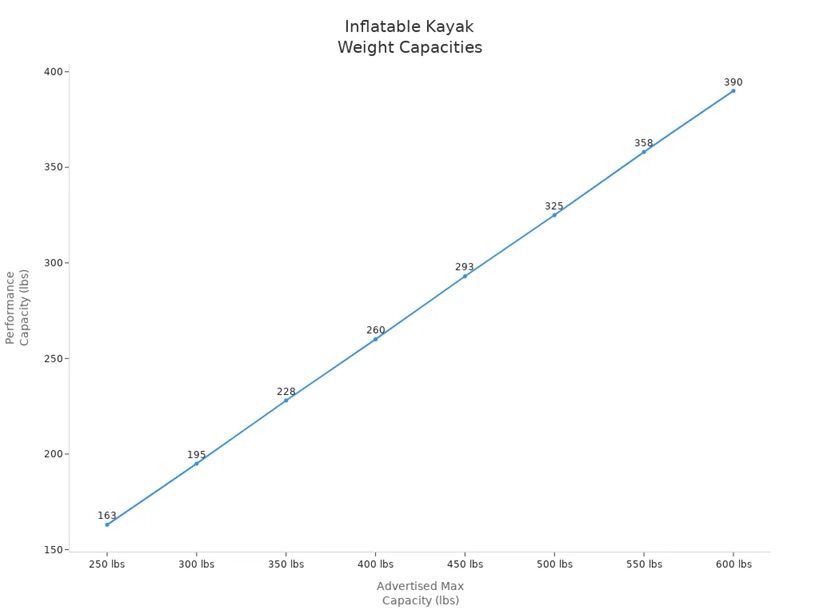
Inflatable kayaks often give you more room for gear than hard-shell models. You can pack camping equipment, extra clothes, or snacks for a day on the water. Just remember to balance your load and keep heavier items low and centered for better stability.
Comfort and Seating
Comfort can make or break your paddling adventure. Inflatable kayak seats come in all shapes and sizes, and some models offer thick padding, adjustable backrests, and even inflatable seat cushions. If you plan to spend hours on the water, look for these features:
|
Kayak Model |
Comfort Features |
|---|---|
|
Advanced Elements AdvancedFrame |
Thickly padded seats appreciated for long sessions. |
|
Aquaglide |
Thickly padded and adjustable seats noted for comfort during extended use. |
|
Sea Eagle 370 |
Fully adjustable seats that can be inflated for height or deflated for comfort. |
|
Aquaglide Deschutes |
Wide open cockpit with thickly padded and easily adjustable seat, enhancing relaxation and comfort. |
|
Bote Deus and Tucktec |
Thick seats, but noted to be rigid and less comfortable over long periods. |
You’ll also want to check for adjustable footrests and high-backed seats. These features help reduce strain on your back and shoulders, letting you paddle longer without discomfort.
-
High-backed and infinitely adjustable seats are ideal for any kayaker.
-
Ergonomic seating and adjustable footrests ensure all-day comfort.
-
Adjustable footrests give you a firm place to push your feet, which reduces lower back fatigue.
When you pick an inflatable kayak with great seating and comfort features, you’ll enjoy every minute on the water—even on those long, sunny days.
Types of Inflatable Kayaks
Choosing the right inflatable kayak starts with matching the boat to your favorite paddling spots. You’ll find that different types of inflatable kayaks shine in specific environments. Let’s break it down so you can pick the best fit for your adventures.
For Calm Lakes
If you love peaceful lakes, you’ll want a kayak that feels stable and easy to steer. Most recreational kayaks have wide, flat hulls. These designs help you stay upright and make navigation simple. You can relax and enjoy the scenery without worrying about tipping over. Touring kayaks also work well for longer lake trips because they glide smoothly and efficiently.
-
Wide kayaks offer great stability for beginners.
-
Flat hulls make paddling straightforward and stress-free.
-
Recreational kayaks excel in lakes, ponds, and gentle streams.
Tip: For lake outings, look for a kayak with a comfortable seat and plenty of storage. You’ll appreciate these features during longer paddles.
For Slow Rivers
Slow-moving rivers call for a kayak that handles gentle currents and twists. You’ll want a model with a bit more agility. Narrower designs and a touch of rocker help you turn quickly and avoid obstacles. While whitewater kayaks are built for rapids, stable recreational kayaks can handle mild river flows.
-
Narrower kayaks with rocker improve maneuverability.
-
Whitewater kayaks perform best in rapids, but you can use recreational kayaks for slow rivers.
-
Stable designs let you paddle confidently, even when the water moves.
Note: If you plan to paddle rivers often, check for reinforced materials. Rocks and branches can test your kayak’s durability.
For Light Coastal Use
Coastal waters bring waves and wind. You’ll need a kayak that tracks well and stays steady. Sea kayaks feature long, narrow hulls for slicing through waves. Wider kayaks give you more stability if you just want to explore near the shore. Whitewater kayaks aren’t ideal for coastal paddling, but some inflatable kayak models offer extra rigidity for light coastal use.
|
Kayak Type |
Best For |
Key Features |
|---|---|---|
|
Sea Kayak |
Coastal exploration |
Long, narrow hull, tracks well |
|
Recreational Kayak |
Calm lakes, slow rivers |
Wide, stable, easy to use |
|
Whitewater Kayak |
Rapids, fast rivers |
Short, agile, reinforced |
You can match the types of inflatable kayaks to your favorite activities. Think about where you’ll paddle most often, and pick a kayak that fits your needs. The right boat makes every trip more enjoyable.
Choosing the Best Inflatable Kayak for You
Price Ranges and Value
When you start shopping, you’ll notice inflatable kayaks come in a wide range of prices. If you want an inflatable kayak on a budget, you can find options that cost less than $250. These are great for beginners or anyone who just wants to paddle on calm water now and then. If you plan to use your kayak more often or want extra durability, you’ll want to look at higher price ranges. Here’s a quick breakdown to help you compare:
|
Category |
Price Range |
Durability & Features |
|---|---|---|
|
Light Recreation |
$80 - $250 |
Made from thin vinyl; suitable for light use; low durability; entry-level option. |
|
Heavy Recreation |
$300 - $700 |
Made from vinyl wrapped in fabric; good durability; suitable for heavy use. |
|
Every Adventure |
$800 and above |
Made from thick PVC; high durability; designed for serious adventurers. |
If you want the best inflatable kayak for frequent trips or rougher water, investing a bit more pays off in the long run.
What to Expect at Each Price Level
You might wonder what features come with each price tag. Lower-priced kayaks usually have fewer features and use lighter materials. These work well for calm lakes or short outings. Mid-range models offer stronger construction and can handle lakes or mild rivers. If you want the best inflatable kayak for challenging conditions, higher-priced models deliver multiple air chambers, puncture resistance, and extra safety.
|
Price Level |
Features |
Intended Use |
|---|---|---|
|
Lower Price |
Fewer features, made from less durable materials. Suitable for calm waters. |
Calm waters, ponds, close to docks. |
|
Mid Price |
More robust construction, suitable for moderate conditions. |
Lakes, mild rivers. |
|
Higher Price |
Multiple layers, puncture-resistant, multiple air chambers. |
Extreme weather, whitewater, long excursions. |
If you need an inflatable kayak on a budget, stick with basic models for gentle water. For more adventure, look for extra features and durability.
Warranty and Support
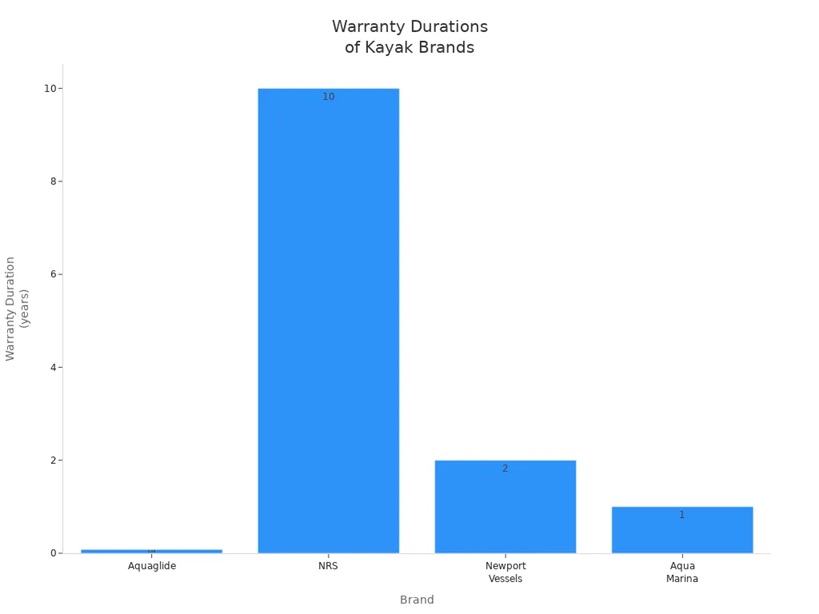
A good warranty gives you peace of mind. Brands offer different coverage, so always check the details before you buy. Some companies, like Aquaglide, give you a 30-day return policy and cover manufacturing defects. NRS stands out with a 10-year warranty for certain inflatable models. Newport Vessels offers a two-year limited warranty, while Aqua Marina provides one year if you follow their guidelines.
You’ll also find helpful customer support from top brands. Many offer warranty registration, repair services, and easy ways to contact customer service. If you want the best inflatable kayak experience, choose a brand with strong support and a solid warranty. That way, you can focus on paddling and worry less about problems down the road.
Practical Buying Tips
Test Before You Buy
You want to feel confident before you commit to an inflatable kayak. If you can, try out a few models at a local shop or demo day. Sit inside, adjust the seat, and check how easy it is to inflate and deflate. Notice the weight and see if you can carry it comfortably. Testing helps you find the right fit for your body and paddling style. If in-person testing isn’t possible, look for detailed videos or virtual demos from trusted retailers.
Tip: Bring your usual paddling gear when you test. You’ll get a real sense of comfort and space.
Reading Reviews
Online reviews can reveal a lot about a kayak’s real-world performance. When you read an inflatable kayak review, pay attention to these points:
-
Stability on the water
-
Durability and material quality
-
Weight for transport and handling
-
Cost compared to features and build
-
Inflation methods and ease of setup
-
Weight capacity for you and your gear
You can also learn from what verified buyers say. Here’s a quick look at common praises and complaints:
|
Common Praises |
Frequent Complaints |
|---|---|
|
Stable even when standing up—great for fishing. |
Too heavy to carry solo from car to water. |
|
Easy assembly and inflation process for a portable model. |
Cockpit felt cramped for larger torso lengths. |
|
Seat is supportive for multi-hour paddles. |
Inflatable lost air overnight despite no visible punctures. |
|
Tracks straight without constant correction. |
Hatch covers leaked during rainstorm. |
|
Feels solid hitting rocks or logs—no cracks after two seasons. |
No room for a cooler or extra dry bag. |
You get a clearer picture of what to expect when you read both the good and the bad.
Essential Accessories
The right accessories make every trip safer and more enjoyable. Here’s a checklist to help you pack for your next outing:
-
Personal Flotation Device (PFD) or life jacket
-
River knife for emergencies
-
Kayak helmet for protection
-
Inflatable kayak thigh straps for control
-
Kayak throw rope for rescues
-
Paddle and a spare paddle
-
Paddling gloves for comfort
-
Dry bag to keep gear safe
-
Water bottle for hydration
-
Small first-aid kit
-
K-Pump for quick inflation
You stay prepared for anything when you bring these essentials. A little planning goes a long way toward happy paddling.
You’ve learned how to pick the best inflatable kayak for your adventures. Remember these key steps:
-
Match your kayak to your favorite activities—fishing, touring, or family fun.
-
Look for stability, easy setup, and solid construction.
-
Choose the right size and weight capacity for your needs.
-
Always bring safety gear and wear a PFD.
A kayak with great stability, durability, and performance makes paddling more enjoyable. Trust your preferences and get ready for happy paddling. Grab your gear and hit the water—your next adventure awaits!
FAQ
How long does it take to inflate an inflatable kayak?
You can usually inflate your kayak in 5–10 minutes with a manual pump. Electric pumps speed things up. Always check the recommended PSI for your model.
Can I use an inflatable kayak for fishing?
Yes, you can! Many inflatable kayaks have rod holders and extra storage. Look for models with stable, wide hulls. You’ll enjoy fishing from a comfortable seat.
Is it safe to paddle an inflatable kayak in the ocean?
Note: You should stick to calm coastal areas. Choose a kayak with high air pressure and sturdy materials. Always wear a life jacket and check weather conditions before heading out.
How do I store my inflatable kayak?
-
Dry your kayak completely.
-
Fold it loosely to avoid creases.
-
Store it in a cool, dry place.
-
Keep it away from direct sunlight.
What accessories do I need for my first trip?
|
Accessory |
Why You Need It |
|---|---|
|
PFD |
Safety |
|
Paddle |
Essential for movement |
|
Pump |
Quick inflation |
|
Dry bag |
Keeps gear safe |


 IPv6 network supported